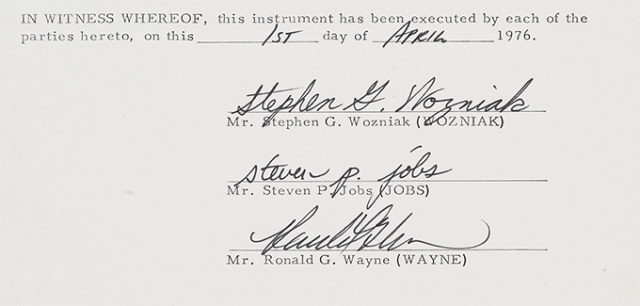
When you talk about the founders of Apple, you first think of Steve Jobs and Steve Wozniak. Jobs, the far-sighted business strategist – and „Woz“, the brilliant inventor. In fact, the Apple Computer Company was founded by three men: „Mr. Stephen G. Wozinak, Mr. Steven P. Jobs and Mr. Ronald G. Wayne“, as it is also stated in the company’s founding contract of April 1, 1976.
Three men founded Apple Computer on April 1st, 1976
Ron Wayne worked at Atari before founding Apple Computer, where he met Steve Jobs, who was involved in new game development. Through Jobs, Wayne became aware of Steve Wozniak, a brilliant hardware designer and engineer who had created the first usable personal computer that would go down in technological history as the Apple I.
But it soon became clear that the two Steves were pursuing very different goals: Steve Wozniak wanted to impress his pal’s guys at the Homebrew Computer Club with his brilliant development steps. Woz had no serious interest in making a big business out of it. Steve Jobs, on the other hand, quickly recognized the business potential. With a computer like Apple, I could break the dominance of the mainframes of companies like IBM and turn the personal computer into a mass product.
However, Jobs was not able to match his interests with Woz. Therefore he relied on Ron Wayne. So he and against this background offered him a minority share in the foundation of Apple Computer on April 1, 1976. Wayne had a 10 percent stake in the company, and Jobs and Wozniak each held 45 percent. Ron Wayne was to tip the scales when the two main players were at loggerheads with each other. „We both trusted him so much that he would resolve any conflicts we had,“ said Steve Jobs.
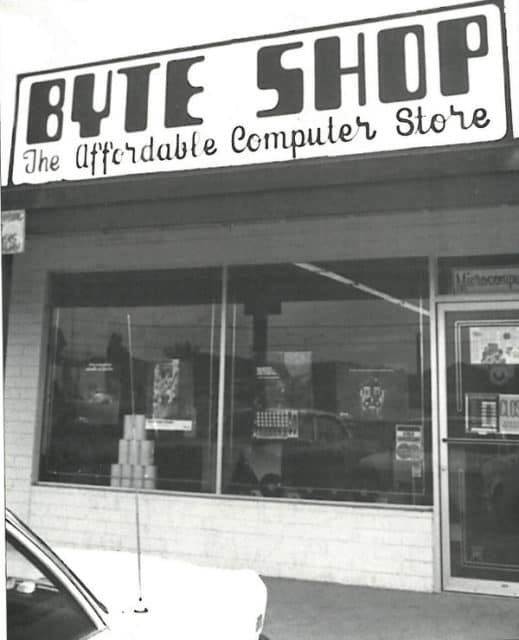
The first larger order came from the Byte Shop
r Wayne got cold feet: „I was practically the adult in the room. I was in my 40s, those kids were around 20. Then about a week and a half later, when I had time to think, I did what most people thought was absolutely crazy. I had my name taken off the contract.“
Wayne was particularly worried about the financial obligations associated with the first major contract for Apple computers. Jobs was in the process of signing supply contracts for the Apple I with first customers like „The Byte Shop“. He was getting the components for it on tick.
„I had very good reasons to remove my name from the contract,“ Wayne said in a 2016 TV interview looking back. „The main reason was that we had started a company. And if we failed, Jobs and Woz would not have had two nickels in their pockets. Who would be left to stick? Well, I had a house and a car, and a bank account, too. I was handy. So I was financially vulnerable. But I also wanted to be my own man. I also realized I was in the shadow of two grand. I was never gonna get my own project. I didn’t like the idea of spending the next 20 years behind piles of paper in an office. That was another reason to get out.“
Ron Wayne talks to Jules Pochy und Jérôme Schmidt (2016)
His co-founder Steve Wozniak could not understand this step. „I don’t know why Ron gave up. „He sold his shares and got out. He may have had good reasons. He got out and he was happy with it. He couldn’t see the big picture. But you couldn’t see the big picture at the time. There was only the Apple I.“
Wayne could
not count on Steve Jobs‘ understanding. Jobs described the process as follows:
„He decided that he really wanted a VCR or something. So he sold us back
10 percent for eight hundred dollars.“
But there
were also reservations in the opposite direction: „I didn’t know whether
jobs were the kind of personality I wanted to work for either,“ Wayne said
in the ARTE interview (2016). „He was just the way he was. He knew exactly
what he wanted to do. And it was better not to get in his way. You would end up
with a footprint on your forehead. Jobs had a very aggressive character. And if
you had to choose between Steve Jobs and an ice cube to warm them up, you’d
snuggle up to the ice cube. But it was the only way he could achieve what he
had achieved with Apple. Apple was Steve Jobs.“
So Wayne has no regrets about getting out of Apple so early: „Those kids were wild hotshots, like whether you have to hold a tiger by the tail. If I’d stayed with Apple, I’d have been caught in a hurry. I’d just be the richest man in the cemetery.“
One thing in life Wayne does regret, though. In the mid-nineties, he saw an ad in a magazine for a company that dealt with autographs and signatures. He remembered the old Apple contract that was lying around in a closet collecting dust. Finally, he sold the historical document for 500 dollars to the autograph dealer.
Years
later, Wayne then saw on television how his old contract came under the hammer
for almost 1.6 million dollars at the Sotheby’s auction house.
„I’m sorry for this incident. But what can I say? It’s the story of my life, right? A day late and a dollar short in my pocket.“
Ron Wayne has left his mark on Apple’s history even after he left as a shareholder. The first trace should be removed quickly because Steve Jobs did not like the first logo of the young company, which Wayne had designed. „In this logo, which they had me design, I captured Wozniak’s bizarreness. The logo with Newton in this Gothic frame with the ribbon and the inscription ‚Apple Computer Company‘ was of course a 19th-century design, not a 20th-century design. I knew that already.“
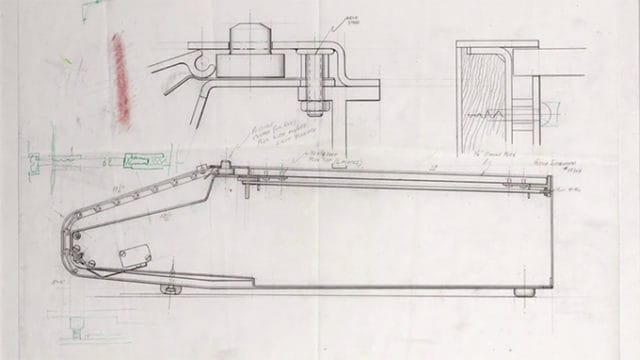
The second mark was deeper: Jobs asked Wayne if he could design a case for the Apple II. Although his design was never used. But Apple adopted the basic design principle.
Design for a housing for the Apple II by Ron Wayne.
To this day, Wayne is amused by the thought that he may have influenced all his later work. „A typical computer today consists of a tower and a circuit board mounted vertically. The keyboard and screen are separate. In my design for the Apple II, I had a horizontal design with a horizontally mounted board. The keyboard was integrated into the housing. The monitor stood on top, as one unit. They used this design for all future models, the Macintosh and Lisa, and so on. All were built this way. This form was unique among modern computers.“
„The demo was not going well. Again. It was a late morning in the fall of 2006. Almost a year earlier, Steve Jobs had tasked about 200 of Apple’s top engineers with creating the iPhone. Yet here, in Apple’s boardroom, it was clear that the prototype was still a disaster. It wasn’t just buggy, it flat out didn’t work. The phone dropped calls constantly, the battery stopped charging before it was full, data and applications routinely became corrupted and unusable. The list of problems seemed endless. At the end of the demo, Jobs fixed the dozen or so people in the room with a level stare and said, «We don’t have a product yet.»
Cover Wired 02/2008
So starts Fred Vogelstein’s article in the U.S. technology magazine «Wired» (Feb. 2008) about the difficult launch of a product that would later turn the mobile phone industry upside down. Vogelstein is known for his well-researched reports and features. For example, he revealed (also for Wired) that the story of how the social network Facebook came into being was somewhat different than founder Mark Zuckerberg had repeatedly claimed.
For the «Untold Story» in Wired about the creation of the iPhone – a story that no one had told before – Fred Vogelstein interviewed countless actors and observers and was able to report on exciting details on this basis: Apple CEO Steve Jobs, for example, did not attack his employees screaming loudly after the failed demo in the fall of 2006 – as he had done so many times before. This time, he remained completely calm. The silence made the panel even more nervous than a tantrum from Jobs. «That was one of the few times at Apple that a cold shiver went down my spine,» said one meeting attendee.
The iPhone’s back story goes back to 2002. Shortly after the unveiling of the first iPod, Apple executives were specifically looking at whether Apple should develop a (mobile) phone. Jobs realized early on that the boom in Blackberry smartphones in the large companies in the USA would sooner or later spread to private customers. It was also foreseeable to him that the cell phones of the future would usually have an MP3 player built in, so that the dominance of the iPod as a mobile music player seemed threatened.
In the short term, however, Apple was not in a position to build a smartphone itself at the time. The iPod’s operating system was not made to handle complicated network operations or elaborate graphics. And no slim version of the Macintosh operating system OS X existed at the time that could have run on the phone chips available at the time.
Palm Treo 600
In particular, the sales success of the Palm Treo 600, which combined the functions of a cell phone, PDA and Blackberry, encouraged Steve Jobs in his intention to become active in the market for so-called convergence devices himself. In 2004, the iPod business already contributed to 16 percent of Apple’s revenue. But new developments such as the growing popularity of 3G cell phones and WiFi phones, as well as falling memory prices, were at least potentially threatening the iPod’s leadership position. In addition, new online music platforms were constantly being established to compete with Apple’s iTunes Store.
Quick action was now necessary, even though Apple itself was not yet ready for the development of an iPhone. In the search for cooperation partners, Steve Jobs chose Motorola. The U.S. mobile phone giant was celebrating great sales successes at the time with its RAZR design cell phone. Jobs also knew Motorola CEO Ed Zander from the time when Zander had worked in the top management of Sun Microsystems. The scenario called for Apple to concentrate fully on developing the music software, while Motorola and cellular provider Cingular would take care of the hardware and complicated network technology.
Jobs expected a worthy successor to the RAZR from Motorola, but was bitterly disappointed: Motorola didn’t present a new design gem, but only slightly modified the existing E398 model. The iTunes-compatible phone could only hold 100 songs. The music tracks could only be transferred to the cell phone via a PC. And on top of that, the ROKR E1 was extremely ugly in Steve Jobs‘ eyes.
At the presentation of the Motorola ROKR E1 in September 2005, the Apple CEO made little effort to conceal his lack of enthusiasm for the first iTunes cell phone. Jobs coolly described it at the event as «an iPod shuffle on a cell phone» – and already suspected that the ROKR would be left behind by buyers. At that point, he was already pursuing completely different plans, namely to build his own music phone and to stop compromising with handset manufacturers or network operators.
Motorola ROKR E1
According to Vogelstein’s research, Jobs met with a handful of Cingular executives as early as February 2005 to discuss a partnership without Motorola. The panel included Cingular CEO Stan Sigman, who would be in charge of AT&T’s wireless business after Cingular was acquired by AT&T in December 1996. In the meeting, Steve Jobs made three things clear. Apple has the technology to build a revolutionary device. Apple is willing to enter into an exclusive agreement with a wireless provider. And – in the event that no provider takes up this business model – Apple is also prepared to enter the market itself as a virtual network provider and compete with the established carriers.
Compared to the situation in 2004, Apple had much better starting conditions for building its own smartphone at that time: As part of the secret work on an Apple tablet PC, the engineers in Cupertino had built up considerable knowledge of touchscreen technology that could also be transferred to a small device. In addition, with the ARM-11 chip, a microprocessor was finally on the market that could give a cell phone the necessary power for sophisticated smartphone and iPod applications. Furthermore, companies such as the British Virgin Group had proven that it was possible to earn money as a virtual network operator without having to operate transmission towers.
In the twelve months of negotiations with Cingular, Apple succeeded in doing nothing less than turning the established business model between cell phone producers and network operators on its head. In the era before the iPhone, providers alone determined the conditions under which services were offered in their network. The cell phones played only a minor role in this scenario and were also usually offered to consumers at absurdly low symbol prices. The subsidized cell phones were ultimately refinanced through long contract terms of the cell phone customers. This model worked quite well as long as the one-dollar or one-euro cell phones constantly attracted new customers who had not previously had a mobile communications contract. In cutthroat competition, however, low-cost cell phones were no longer enough to retain customers over the long term.
For ages, Apple’s recipe for success has included an almost paranoid secrecy associated with every new product. And with the iPhone, Steve Jobs personally made sure that the usual security precautions were once again tightened. Internally, the iPhone project was just called Purple 2 or P2. Jobs spread the development teams across the entire Apple campus in Cupertino so that no one could get an idea of the overall strength of the project team.
When Apple employees went to Cingular, they posed as Infineon employees, Wired reporter Vogelstein found out. The German chip company supplies the radio component of the iPhone. Jobs even made sure that hardly anyone within Apple got to see the overall concept of the iPhone. The hardware team had no idea what the user interface would look like until shortly before the iPhone was unveiled at MacWorld Expo in January 2007. Their dummy devices were loaded with fake software that had nothing to do with the eventual iPhone. And the software people were handed clumsy wooden boxes that ran their programs. According to Vogelstein’s research, only about 30 top people in the project were allowed to see the complete iPhone before MacWorld 2007.
The secrecy did not stop after the launch of the iPhone. Until today the details of the revenue sharing between AT&T and Apple are secret. However, analysts such as Gene Munster of Piper Jaffray, after analyzing the balance sheets, assume that Apple receives around 18 US dollars per month from AT&T for each iPhone customer. If this figure is realistic, Apple will take another $432 in commission over the course of the minimum contract period of 24 months, in addition to the hardware price of $399. It’s no wonder that cell phone manufacturers like Nokia and SonyEricsson looked to California with disbelief and envy – and providers like Vodafone now fear that the iPhone example will now set a precedent for other top cell phones.
Telekom CEO René Obermann and Apple-CEO Steve Jobs in Berlin (19.09.2007) – Photo: Peer Grimm, dpa
Later, the head of Deutsche Telekom, René Obermann, found himself in a similar position to Cingular and AT&T in 2006. For Obermann, the sex appeal of the iPhone offered a unique opportunity to distract from the gray reality at T-Mobile and the entire Telekom Group. For this reason, Obermann also accepted conditions that he would otherwise not have accepted from any other cell phone manufacturer.
iPhone on the cover of Time Magazine
AT&T and T-Mobile wanted the iPhone in their product portfolios. Absolutely. They also respected the immense effort Apple had put into developing the iPhone. For example, Apple spent several million dollars on the purchase of equipment for antenna and network tests alone. In total, the development of the iPhone is said to have cost around 150 million dollars. At least in the U.S., the formula for business success with the iPhone worked. In the first 200 days, Apple sold four million iPhones, Apple CEO Steve Jobs announced at the MacWorld Expo. According to a study by Canalys, the iPhone already captured third place in the «smart mobile devices» category in the 4th quarter of 2007 with a market share of 6.5 percent, behind Nokia (53 percent) and Blackberry manufacturer Research In Motion (11.4 %). This means that the iPhone was able to overtake other smartphone manufacturers such as Motorola, SonyEricsson, and Windows Mobile licensees such as HTC and Samsung right from the start. However, smartphones only account for a small fraction of the mobile phone market, which is worth billions.
Market success in Germany was more modest. In the first eleven weeks, T-Mobile sold just 70,000 iPhones, while in the U.S. an average of 20,000 devices crossed the counter every day. However, there are also many iPhone buyers in Germany who do not appear in any T-Mobile statistics because they acquired their dream phone on the gray market on the Internet or on a trip to the USA. Experts believe that one in four iPhones sold in the U.S. was not registered with AT&T.
Das Projekt ist in keiner Weise mit der Apple Inc. verbunden. Apple, das Apple-Logo, Macintosh, iPhone, iPod, iPad, AirPod, HomePod, iCloud, iTunes sind eingetragene Warenzeichen der Apple Inc..
Datenschutzhinweise:
Ihr Besuch meiner Internetpräsenz wird protokolliert. Erfasst werden die aktuell von Ihrem Rechner verwendete IP-Adresse, Datum, Uhrzeit und die von Ihnen betrachteten Seiten. Ein Personenbezug ist im Allgemeinen nicht möglich. Eine Auswertung der Daten erfolgt nur in anonymisierter Form für statistische Zwecke. Falls Sie sich auf einer meiner Seiten als Mitglied registrieren lassen, werden sog. Cookies zur Authentifizierung verwendet. Cookies sind Textdateien, die auf Ihrem Computer gespeichert werden und die eine Analyse der Benutzung der Website durch die Anwender ermöglichen. Diese Cookies werden nur dann gelöscht, wenn Sie sich wieder abmelden (”ausloggen”). Sie können Cookies auch selbst löschen. Hinweise dazu und zum generellen Verändern der Cookie-Behandlung sind den Hilfedokumenten des jeweiligen Browsers entnehmen.
Google Analytics
Diese Website benutzt Google Analytics, einen Webanalysedienst der Google Inc. („Google“). Google Analytics verwendet sog. „Cookies“, Textdateien, die auf Ihrem Computer gespeichert werden und die eine Analyse der Benutzung der Website durch Sie ermöglichen. Die durch den Cookie erzeugten Informationen über Ihre Benutzung dieser Website (einschließlich Ihrer IP-Adresse, die jedoch mit der Methode _anonymizeIp() anonymisiert wird, so dass sie nicht mehr einem Anschluss zugeordnet werden kann) wird an einen Server von Google in den USA übertragen und dort gespeichert. Google wird diese Informationen benutzen, um Ihre Nutzung der Website auszuwerten, um Reports über die Websiteaktivitäten für die Websitebetreiber zusammenzustellen und um weitere mit der Websitenutzung und der Internetnutzung verbundene Dienstleistungen zu erbringen. Auch wird Google diese Informationen gegebenenfalls an Dritte übertragen, sofern dies gesetzlich vorgeschrieben oder soweit Dritte diese Daten im Auftrag von Google verarbeiten. Google wird in keinem Fall Ihre IP-Adresse mit anderen Daten von Google in Verbindung bringen. Sie können die Installation der Cookies durch eine entsprechende Einstellung Ihrer Browser Software verhindern; wir weisen Sie jedoch darauf hin, dass Sie in diesem Fall gegebenenfalls nicht sämtliche Funktionen dieser Website vollumfänglich nutzen können. Durch die Nutzung dieser Website erklären Sie sich mit der Bearbeitung der über Sie erhobenen Daten durch Google in der zuvor beschriebenen Art und Weise und zu dem zuvor benannten Zweck einverstanden. Sie können der Erhebung der Daten durch Google-Analytics mit Wirkung für die Zukunft widersprechen, indem sie ein Deaktivierungs-Add-on (http://tools.google.com/dlpage/gaoptout?hl=de) für Ihren Browser installieren.
Cookies und Meldungen zu Zugriffszahlen (VG Wort)
Wir setzen „Session-Cookies“ der VG Wort, München, zur Messung von Zugriffen auf Texten ein, um die Kopierwahrscheinlichkeit zu erfassen. Session-Cookies sind kleine Informationseinheiten, die ein Anbieter im Arbeitsspeicher des Computers des Besuchers speichert. In einem Session-Cookie wird eine zufällig erzeugte eindeutige Identifikationsnummer abgelegt, eine sogenannte Session-ID. Außerdem enthält ein Cookie die Angabe über seine Herkunft und die Speicherfrist. Session-Cookies können keine anderen Daten speichern. Diese Messungen werden von der Kantar Deutschland GmbH nach dem Skalierbaren Zentralen Messverfahren (SZM) durchgeführt. Sie helfen dabei, die Kopierwahrscheinlichkeit einzelner Texte zur Vergütung von gesetzlichen Ansprüchen von Autoren und Verlagen zu ermitteln. Wir erfassen keine personenbezogenen Daten über Cookies.
Viele unserer Seiten sind mit JavaScript-Aufrufen versehen, über die wir die Zugriffe an die Verwertungsgesellschaft Wort (VG Wort) melden. Wir ermöglichen damit, dass unsere Autoren an den Ausschüttungen der VG Wort partizipieren, die die gesetzliche Vergütung für die Nutzungen urheberrechtlich geschützter Werke gem. § 53 UrhG sicherstellen.
Datenschutzerklärung zur Nutzung des Skalierbaren Zentralen Messverfahrens
Unsere Website und unser mobiles Webangebot nutzen das „Skalierbare Zentrale Messverfahren“ (SZM) der Kantar Deutschland GmbH für die Ermittlung statistischer Kennwerte zur Ermittlung der Kopierwahrscheinlichkeit von Texten.
Dabei werden anonyme Messwerte erhoben. Die Zugriffszahlenmessung verwendet zur Wiedererkennung von Computersystemen alternativ ein Session-Cookie oder eine Signatur, die aus verschiedenen automatisch übertragenen Informationen Ihres Browsers erstellt wird. IP-Adressen werden nur in anonymisierter Form verarbeitet.
Das Verfahren wurde unter der Beachtung des Datenschutzes entwickelt. Einziges Ziel des Verfahrens ist es, die Kopierwahrscheinlichkeit einzelner Texte zu ermitteln.
Zu keinem Zeitpunkt werden einzelne Nutzer identifiziert. Ihre Identität bleibt immer geschützt. Sie erhalten über das System keine Werbung.
Rechtliche Hinweise: Ich bin um die Richtigkeit und Aktualität der auf diesen Internetpräsenz bereitgestellten Informationen bemüht. Trotzdem können Fehler und Unklarheiten nicht vollständig ausgeschlossen werden. Ich übernehme deshalb keine Gewähr für die Aktualität, Richtigkeit, Vollständigkeit oder Qualität der bereitgestellten Informationen. Für Schäden materieller oder immaterieller Art, die durch die Nutzung oder Nichtnutzung der dargebotenen Informationen bzw. durch die Nutzung fehlerhafter und unvollständiger Informationen unmittelbar oder mittelbar verursacht werden, hafte ich nicht, sofern mir nicht nachweislich vorsätzliches oder grob fahrlässiges Verschulden zur Last fällt. Ich behalte mir vor, Teile des Internetangebots oder das gesamte Angebot ohne gesonderte Ankündigung zu verändern, zu ergänzen, zu löschen oder die Veröffentlichung zeitweise oder endgültig einzustellen.
Trotz sorgfältiger inhaltlicher Kontrolle übernehme ich keine Haftung für die Inhalte externer Links. Für den Inhalt der verlinkten Seiten sind ausschließlich deren Betreiber verantwortlich.
Layout und Inhalte dieser Seiten sind urheberrechtlich geschützt.
Apple Inc. in no way endorses or is affiliated with this site. Apple, the Apple logo are registered trademarks of Apple Inc.
Steve Jobs was a visionary, a genius, a perfectionist, and sometimes a difficult contemporary. When the Apple co-founder died in 2011 at the age of just 56, even many Apple fans saw a bleak future for the iPhone company. But everything turned out quite differently.
Apple without Steve Jobs was unimaginable. But on October 5, 2011, the inevitable day came: The charismatic Apple co-founder lost his long battle with cancer. Jobs was only 56 years old.
Six weeks earlier, on August 24, 2011, the Apple boss had appointed his confidant Tim Cook as the company’s new CEO. This decision surprised many observers. Cook had made a name for himself as a logistics and production expert. However, he did not show any signs of the charisma with which Jobs had regularly captivated the masses.
Among the skeptics at the time was Larry Ellison, who had been close friends with the Apple co-founder for years. The head of software giant Oracle believed that Apple was doomed without Steve Jobs. In a TV interview, he drew a parallel to 1985, when Apple’s board of directors forced Steve Jobs out of the company. Over the next twelve years, Apple was so run down that the company was on the verge of bankruptcy in 1997, and Jobs was brought back as a savior. „We saw Apple with Steve Jobs, we saw Apple without Steve Jobs. We saw Apple with Steve Jobs. Now we’re going to see Apple without Steve Jobs,“ Ellison said. „I like Tim Cook. I think there are a lot of talented people over there. But Steve is irreplaceable.“
But things turned out very differently after Jobs‘ death than Ellison had feared. Apple is selling more devices and services than ever before. In August 2018, the iPhone maker went down in financial history as the first U.S. company to hit a trillion-dollar valuation on the stock market. Just two years later, it was two trillion. In addition to the stock market boom, experts believe that high customer loyalty was a major factor in the company’s rise. „When a new user starts using an Apple smartphone, they tend to stick with an Apple smartphone,“ explains Jeriel Ong, an equity analyst at Deutsche Bank.
And the rally is not over yet. Since October 2011, the share price has risen from around $13 to an all-time high of just under $150. Cook also regularly treats shareholders to dividends, which Jobs has always refused.
Cook succeeded in constantly capturing new groups of buyers with the iPhone. He also expanded the range of add-on devices such as the Apple Watch computer watch and AirPods earphones and placed subscription services such as iCloud and Apple TV+ on the market. It also managed to charge higher prices for its products, so much so that a large portion of the entire industry’s profits now end up with Apple.
Revenue and Profits, Apple Inc. (Calendar Year)
However, Tim Cook is still not a great presenter on stage. Nevertheless, he has now set the accents that set him apart from his predecessor. One example is the topic of the environment. In 2008, Steve Jobs was still engaged in heated exchanges with representatives of Greenpeace when the environmentalists demanded that he stop using brominated flame retardants in Apple products. These can be toxic, are difficult to break down in the environment, and accumulate in living creatures.
Under Cook’s direction, Apple eliminated not only the controversial flame retardants but also all other environmental toxins in production. He also converted the company completely to renewable energy. This ambitious project is now to be extended to the entire supply chain.
This change has also been registered by Greenpeace. „Since Tim Cook took over at the helm of Apple, he has made environmental protection an important part of the company’s identity,“ the organization stated in 2017 when it published a report on environmental standards at electronics manufacturers. Apple only had to admit defeat to smartphone provider Fairphone in the „Greener Electronics“ ranking because the Dutch company’s devices are easier to repair.
In addition to the environmental issue, Apple under Cook is also trying harder to set itself apart from the competition in the area of data protection. Last April, for example, Apple changed its iPhone software so that providers like Facebook now have to ask users for permission if they want to track their activities across different apps and websites. Jobs had announced this privacy principle back in 2010 at the „D8“ conference but left the implementation to his successor.
Tim Cook
When it comes to protecting privacy, Cook was already able to make his mark in front of a large public in 2016. At that time, the FBI demanded that Apple manipulate the iPhone operating system iOS in such a way that law enforcement officers could search the locked iPhone of the bomber after a terrorist attack in San Bernardino. Cook rejected that claim, saying it would not undermine the products‘ security features.
Cook also faced setbacks on this issue, however. For example, Apple shelved plans to introduce a scanning feature on the iPhone that would prevent child abuse images from being uploaded to the cloud. Previously, there had been an outcry of indignation that Apple was taking the wrong approach in the justified fight against child pornography.
The biggest shortcoming of the Cook era, however, is that Jobs‘ successor has yet to come up with a revolutionary new product. His predecessor regularly pulled a „one more thing“ out of his hat that turned entire industries upside down: the iMac in 1999, the iPod and the iTunes music service in 2001, the revolutionary iPhone in 2007, and the iPad in 2010. Under Cook, there are rumors of revolutionary new products such as an Apple car or glasses for augmented reality applications, but so far Apple fans are waiting in vain.
In this context, Cook critics point to a quote from Steve Jobs written in large letters on the wall of Apple’s old headquarters: „If you do something and it turns out pretty good, then you should go do something else wonderful, not dwell on it for too long. Just figure out what’s next.“
Steve Jobs combined his visions with art and technology in order to bring products to the market that have changed the lives of millions of people. He founded Apple and the computer industry, was fired, and twelve years later saved the company from bankruptcy. Afterwards, he pushed through a series of innovations that were really enough for seven lives. After his early death, not only his fans are wondering how Apple will deal with Steve Jobs’ legacy.
By Christoph Dernbach
Steve Jobs (March 2011) – Photo: Monica M. Davey
Steve Jobs‘ highschool photo
Steve Jobs must already have been charismatic as a twelve year old school boy. Or was it just cockiness with which he would later take his business partners by surprise time and again? As an eighth grade student, he wanted to build a frequency counter for his school project and needed some parts. He contacted non other than Bill Hewlett, who was the legendary co-founder of computer group Hewlett-Packard (HP).
In the 60s, the Silicon-Valley pioneer’s contact information could still be found in the phone book. The lanky boy did not just coax the needed parts free of charge from the group boss. „He answered and chatted with me for twenty minutes. He got me the parts, but he also got me a job in the plant where they made frequency counters,” Jobs told book author Walter Isaacson for his biography.
Steve Jobs worked there the summer after his freshman year at Homestead High. obs worked there the summer after his freshman year at Homestead High. “My dad would drive me in the morning and pick me up in the evening.” He found himself at the right place at the right time. Still, Steve Jobs‘ fate as the most successful entrepreneur of America was not handed to him at birth.
“He was a boy who had no money,” recalls his friend and Apple co-founder Steve Wozniak. “He had nothing except his intellect. But he brought us things that became a challenge for all of us.” Paul Otellini, CEO of chip giant Intel, said: „True genius is measured by the ability to touch every person on the planet. Steve did that, not just once, but many, many times over his amazing life.“ In contrast to industry titans like Bill Gates, Steve Jobs came not from a wealthy home, but from a lower-class background.
Steve Jobs with his father Paul Jobs (1958)
His biological parents, the Syrian student Abdulfattah John Jandali and his American girlfriend Joanne Simpson, gave him up for adoption after his birth. In 1955, the still unmarried couple, both 23, was studying at the University of Wisconsin and found themselves unable to care for the child without a proper income. Actually, his parents insisted on giving him away to an academic family, which could guarantee that he could one day attend university. But the desired family got cold feet and cancelled the adoption in the last minute.
Finally, the child ended up in the house of Paul and Clara Jobs. Steve’s adoptive parents were simple people. His father worked as a car mechanic and his mother as an office employee. When Steve was five years old, his parents moved with him from San Francisco to Mountain View, in the middle of booming Silicon Valley. Author Walter Isaacson relates in his biography of Steve Jobs that in the new neighborhood Jobs told a girl that he was an adopted child. „So does that mean your real parents didn’t want you?” the girl asked. “Lightning bolts went off in my head,” according to Jobs. “I remember running into the house, crying. And my parents said, ‘No, you have to understand. We specifically picked you out.” This key scene described the tension between the terms “abandoned”, “chosen”, and “special” at a very early age for Steve Jobs.
Steve gets it
Who knows where Steve Jobs’ journey through life would have brought him if he had not met electronics enthusiast Steve Wozniak, who was four classes above him in school. Despite the age difference, the two Steves got along very well. “It seemed as if we had a lot in common,” recalled Woz later in his autobiography. “Typically, it was really hard for me to explain to people the kind of design stuff worked on, but Steve got it right away. And I liked him. He was kind of skinny and wiry and full of energy.”
Steve Jobs (circled) at Homestead High School Electronics Club (1969)
Jobs, like Wozniak before him, attended Homestead High School in Cupertino, California, a solidly middle-class school in the suburbs of Silicon Valley. Homestead was progressive, with an innovative electronics program that shaped Wozniak’s life. Jobs and Wozniak had been friends for some time. They met in 1971 when their mutual friend, Bill Fernandez, introduced then 21-year-old Wozniak to 16-year-old Jobs. After hours, the two Steves would often meet at Hewlett-Packard lectures in Palo Alto.
The Apple Macintosh revolutionized the entire computer industry by the year of 1984. Steve Jobs and his ingenious Macintosh team arranged for the computer to be used by the normal “person in the street” – and not only by experts.
Steve Jobs and Bill Atkinson (Photo: Norman Seiff)
“Insanely great” – Steve Jobs could hardly put into words his enthusiasm by the launch of the Macintosh. On the legendary annual general meeting of January 24th, 1984, in the Flint Center not far from the Apple Campus in Cupertino, the Apple co-founder initially quoted Bob Dylan’s “The Times They Are A-Changin’” in order to then polemicize against an imminent predominance of the young computer industry by IBM.
Steve Jobs‘ introduction of the Apple Macintosh:
„The early 1980s. 1981 – Apple II has become the world’s most popular computer, and Apple has grown to a 300 million dollar corporation, becoming the fastest growing company in American business history. With over fifty companies vying for a share, IBM enters the personal computer market in November of 1981, with the IBM PC.
1983. Apple and IBM emerge as the industry’s strongest competitors, with each selling approximately one billion dollars worth of personal computers in 1983. The shakeout is in full swing. The first major personal computer firm goes bankrupt, with others teetering on the brink. Total industry losses for 1983 overshadow even the combined profits of Apple and IBM.
It is now 1984. It appears that IBM wants it all. Apple is perceived to be the only hope to offer IBM a run for its money. Dealers, after initially welcoming IBM with open arms, now fear an IBM dominated and controlled future and are turning back to Apple as the only force who can ensure their future freedom.
IBM wants it all, and is aiming its guns at its last obstacle to industry control, Apple. Will Big Blue dominate the entire computer industry? The entire information age? Was George Orwell right?„
The crowd, among them the complete Macintosh developer’s team, shouted back: “Nooooo!”
The introduction of the first Mac on January 24th, 1984; taken from the „Lost 1984 Videos“
There had been only two milestone products so far: the Apple II in 1977 and the IBM PC in 1981, Jobs continued. “Today (…) we are introducing the third industry milestone product, the Macintosh. Many of us have been working on Macintosh for over two years now and it has turned out insanely great.”
Steve Jobs
Taking a look at the history of the personal computer today, Steve Jobs was on the right track with his historical comparison. However, it would not be IBM that became the great dominator of the computer industry over the years, but rather, the alliance of Microsoft and Intel.
Previous to the Macintosh developer team, others had already tried to design a computer with a mouse and a graphical user interface – one year before Apple did, with its own business computer Lisa, which retailed for 10,000 dollars.
Microsoft and Apple have been business partners and tough competitors for many years. Back in the seventies, Steve Jobs and Bill Gates worked close together. In 1997 the Windows-manufacturer helped Steve Jobs saving Apple.
In the early seventies there was no such thing as a personal computer. I took geniuses and visionary like Steve Wozniak and Bill Gates to invent this new industry. The early computer geeks were energized by the arrival of the January 1975 issue of Popular Mechanics, which had on its cover the first personal computer kit, the Altair. The Altair wasn’t a real computer —more a $495 pile of parts that had to be soldered to a board that would then do little—but for hobbyists and hackers it heralded the dawn of a new era. Bill Gates and Paul Allen read the magazine and started working on a version of BASIC, an easy-to-use programming language, for the Altair. It also caught the attention of Jobs and Wozniak.
Later Steve Jobs had to ask for the Microsoft BASIC because his friend Wozniak didn’t finish his own version of NASIC for the Apple II. “He was very childlike,“ said Jobs later to the author of hi biography, Walter Isaacson, abou „Woz“. „He did a great version of BASIC, but then never could buckle down and write the floating-point BASIC we needed, so we ended up later having to make a deal with Microsoft. He was just too unfocused.“
With the rise of the Apple II in the late seventies Microsoft became more and more successful – even before the IBM PC was invented. When Apple developed the Macintosh Bill Gates and his team were the most important software partner – despited the fact that Microsoft was also the driving force behind the IBM PC and the PC clones. And Steve Jobs even invited Bill Gates for the preview of the Mac: The high point of the October 1983 Apple sales conference in Hawaii was a skit based on a TV show called The Dating Game. Jobs played emcee, and his three contestants, whom he had convinced to fly to Hawaii, were Bill Gates and two other software executives, Mitch Kapor and Fred Gibbons. As the show’s jingly theme song played, the three took their stools.
Gates, looking like a high school sophomore, got wild applause from the 750 Apple salesmen when he said, “During 1984, Microsoft expects to get half of its revenues from software for the Macintosh.” Jobs, clean-shaven and bouncy, gave a toothy smile and asked if he thought that the Macintosh’s new operating system would become one of the industry’s new standards. Gates answered, “To create a new standard takes not just making something that’s a little bit different, it takes something that’s really new and captures people’s imagination. And the Macintosh, of all the machines I’ve ever seen, is the only one that meets that standard.”
Title of BusinessWeek (October 3rd, 1983)
But even as Gates was speaking, Microsoft was edging away from being primarily a collaborator with Apple to being more of a competitor. It would continue to make application software, like Microsoft Word, for Apple, but a rapidly increasing share of its revenue would come from the operating system it had written for the IBM personal computer. The year before, 279,000 Apple IIs were sold, compared to 240,000 IBM PCs and its clones. But the figures for 1983 were coming in starkly different: 420,000 Apple IIs versus 1.3 million IBMs and its clones. And both the Apple III and the Lisa were dead in the water.
Just when the Apple sales force was arriving in Hawaii, this shift was hammered home on the cover of Business Week. Its headline: “Personal Computers: And the Winner Is . . . IBM.” The story inside detailed the rise of the IBM PC. “The battle for market supremacy is already over,” the magazine declared. “In a stunning blitz, IBM has taken more than 26% of the market in two years, and is expected to account for half the world market by 1985. An additional 25% of the market will be turning out IBM-compatible machines. (Walter Isaacson, p. 159-160)
Apple boss John Sculley’s marketing strategy for the launch of the Macintosh was obvious. The former Pepsi manager, who had been brought to Apple by Steve Jobs, intended to arrange a duel between IBM and Apple, black vs. white, with Apple playing the role of the underdog. Sculley wrote in his book Odyssey:
So we needed a campaign that would focus on a two-horse race to leverage off of Apple’s underdog status. Dozens of other computer companies were coming out with products and I was afraid we were going to get lost in the crowd. If we could create a two-horse race between us and IBM, we might be able to convince people that there are really only two computer companies competing in the marketplace. In any large consumer industry, few people remember the third- or fourth-largest competitor.
In the fight against competitors such as Atari, Commodore, Sinclair and Amstrad, the Apple strategy paid off well. But Sculley, as well as Steve Jobs, had completely underestimated that Microsoft, being an ally from the outset, would, with the aid of Apple, develop into a dominant power of the PC industry and even dwarf IBM.
Bill Gates und Paul Allen (1981)
Bill Gates and Paul Allen had founded Microsoft as a small software company in Albuquerque (New Mexico) in 1975 and developed the programming language BASIC for the legendary computer MITS Altair in collaboration with other co-workers. Due to fortunate circumstances, Microsoft landed the order from IBM to deliver not only BASIC, but also the operating system for the first IBM PC in 1980. In the negotiation phase, the then leading operating system manufacturer Digital Research (CP/M) did not want to engage in page-filling adhesion contracts from IBM – and thus lost this gigantic deal.
Though Microsoft did not have any operating system at that time, this did not prevent Bill Gates and his companion Steve Ballmer from playing for high stakes while facing IBM. From their neighboring software shack Seattle Computers (in the mean time, Microsoft had moved to the northwest of the USA) they bought all rights for QDOS (Quick and Dirty Operating System) for no less than 50,000 dollars in July 1981 and renamed it as MS-DOS. Gates had been clever enough at that time not to have all rights to the system negotiated away by the IBM crew and was therefore able to win clone companies such as Compaq as customers later.
When Microsoft provided their BASIC for the Apple II, Steve Jobs and Bill Gates constantly ran into each other at that time. “Even before we finished our work on the IBM PC, Steve Jobs came and talked about what he wanted to do, what he thought he could do, sort of a Lisa but cheaper. We said boy, we’d love to help out”, Gates remembers. “The Lisa had all its own applications, but of course they required a lot of memory, ah, and we thought we could do better, and so Steve signed a deal with us to actually provide bundled applications for the first Mac, and so we were big believers in the Mac and what Steve was doing there.”
Apple urgently needed software for the Mac, as there did not yet exist any program for the new system except for their in-house products MacWrite and MacPaint. Gates promised to have the programs Chart and File written for the Mac in addition to the spreadsheet program Excel. Steve Jobs appreciated the risk Microsoft took, but was not content with the first results though. “Most people don’t remember, but until the Mac, Microsoft was not in the applications business… it was dominated by Lotus. And Microsoft took a big gamble to write for the Mac.”
Apple still could have coped well with having given Microsoft’s new application business a leg up. However, Bill Gates had tasted blood in the Macintosh project. Jeff Raikes, who was responsible for the Office business at Microsoft until early 2008, reviews: “And so we got started in early 1982 on our Macintosh software effort and I think at that point in time, you know, it really clicked with Bill that, you know, graphic user interface was going to be the way, the way of the future. But while Bill was having his own GUI revelation, Jobs believed that Apple’s true enemy was IBM.”
Quote of the movie: „Pirates of Silicon Valley“ – Microsoft steals from Apple
In June of 1985, Bill Gates sent a remarkable memo to both the then-CEO of Apple, John Sculley, and then-head of Macintosh development, Jean Louis Gassée, and urged them to spread their wings by licensing their hardware and operating system to other companies.
Apple must make Macintosh a standard. But no personal computer company, not even IBM, can create a standard without independent support. Even though Apple realized this, they have not been able to gain the independent support required to be perceived as a standard.
Apple ignored his advice.
Five months after he sent the memo, Windows 1.0 was released. Microsoft’s decision to do exactly as Gates had recommended to Apple resulted in market domination. Had Apple taken Gates‘ advice, things could have been so very different.
Apple co-founder Steve Wozniak has since said:
„The computer was never the problem. The company’s strategy was. Apple saw itself as a hardware company; in order to protect our hardware profits, we didn’t license our operating system. We had the most beautiful operating system, but to get it you had to buy our hardware at twice the price. That was a mistake. What we should have done was calculate an appropriate price to license the operating system. We were also naive to think that the best technology would prevail. It often doesn’t.“
Windows 1.01 was based on DOS and was incredibly slow, but it reminded one of the Macintosh GUI in some features. In order to prevent Apple from taking legal action, Gates put the screws on Apple boss Sculley. His message was: As soon as Apple sends out the lawyers, Microsoft will immediately stop the development of Word and Excel for the Mac. Since Apple was depending on the Microsoft applications, Sculley licensed some of the Mac technologies to Microsoft.
As Microsoft went public with the next large version leap of Windows 2.03 at the beginning of 1988, Sculley tried to pull the ripcord and sued Microsoft and Hewlett-Packard for copyright infringement on March 17, 1988. John Sculley had been in a difficult situation, particularly as he had engaged in vague formulations in the contract with Microsoft in 1985, which gave great leeway to Gates and his lot. Moreover, he knew that his chances to win an action against Microsoft had been, purely from a legal viewpoint, not particularly good: “The look and feel, which is how it looks, the experience of using it, was not patentable, but it was copyrightable, but there was no precedent law. This was going to be a precedent setting case.”
Parody of an advertising spot for Windows featuring Steve BallmerBill Gates recalls also reluctant this time.: „But it was a period of five years where, Microsoft er, our whole strategy would have been ruined because Windows was very important to us. (…) We assumed that the lawyers, the judges would all come to the right conclusion which eventually they did.“ Sculley: „And Apple lost. But in that period of about six years that this case was going on it may have lulled us into a bit of complacency thinking that we were going to be insulated, you know, from the Windows attack.“
The introduction of Windows 3.1 in 1992 brought Microsoft the breakthrough in the “GUI war”. The system lacked the elegance and usability of the Macintosh system 7.0, but Windows appeared good enough to most PC users. With the help of Windows 95, which had been introduced with gigantic effort on August 24, 1995, Microsoft caught up closer to the Mac and in some aspects even appeared more progressive than the Mac OS, which had become dated in the meantime.
Steve Jobs, who, as the head of NeXT, had observed the advance of Windows from a distance, did not have any kind words for Bill Gates at the launch of Windows 95:
The only problem with Microsoft is they just have no taste, they have absolutely no taste, and what that means is – I don’t mean that in a small way, I mean that in a big way. In the sense that they don’t think of original ideas and they don’t bring much culture into their product, and you say why is that important – well you know proportionally spaced fonts come from type setting and beautiful books, that’s where one gets the idea – if it weren’t for the Mac, they would never have that in their products and so I guess I am saddened, not by Microsoft’s success – I have no problem with their success, they’ve earned their success for the most part. I have a problem with the fact that they just make really third rate products.
It is claimed that Jobs has apologized to Bill Gates for this remark later.
Steve Jobs about Microsoft (1995)
The relationship between Apple and Microsoft – and thus also the relationship between Steve Jobs and Bill Gates – did not get back to normal before the summer of 1997, when Steve Jobs had returned to Apple and engaged in the support of Microsoft in order to make the troubled company profitable again.
Bill Gates on the video screen at the MacWorld Expo 1997 in Boston
Many faithful Apple fans still remember with horror the moment when Steve Jobs announced the former archrival very pragmatically as the knight in shining armor at the MacWorld Expo 1997 in Boston with Bill Gates appearing on an oversized video screen just like “Big Brother.” Introducing Gates, Jobs said: ““We have to let go of the notion that in order to for Apple to win, Microsoft has to lose. Relationships that are destructive don’t help anybody. The era of setting this up as a competition between Apple and Microsoft is over.”
Microsoft invested 150 million dollars in 150,000 Apple stocks and, according to certain rumors, paid further 100 million dollars for copyright infringement during the past few years. At the same time, Gates obliged himself to continue the development of the Internet Explorer and Microsoft Office for the Mac for the following five years. Gates drew hisses from the audience of Apple faithful. The crowd also groaned when Steve Jobs said Apple would make Microsoft’s Internet Explorer the default browser for viewing the World Wide Web on Macintosh computers. That development was a blow to Netscape Communications Corp., which made a more popular competing browser and lost later on in the famous „browser war“ against Microsoft.
In October 2015 Steve Ballmer appeared on Bloomberg TV where the former executive briefly touched on Microsoft’s monumental 1997 investment in Apple.
At the time, Microsoft’s deal with Apple not only helped rescue the company from the brink of bankruptcy, it gave Apple a much-needed lifeline, affording the company room and time to innovate. And as we all know, the deal ultimately helped set Apple up for the most astounding tech resurgence in history.
https://www.facebook.com/watch/?v=970956106278806
In 2010 – after a stunnishing comeback – Apple Inc. overtook Microsoft Corp. to become the most valuable technology company on optimism it can keep adding customers for its iPhone, Macintosh computer and iPad. On May 26th by 4 p.m. New York time in Nasdaq Stock Market trading, Apple’s market value was at $222.1 billion, higher than Microsoft’s $219.2 billion. That made Apple the most valuable technology firm in the world.
In an interviews with Kara Swisher and Walt Mossberg from the Wall Street Journal Apple CEO Steve Jobs downplayed the significance of Apple’s passing Microsoft in market value. „For those of us who have been in the industry a long time, it’s surreal,“ Jobs said. „But it doesn’t matter very much, it’s not what’s important.
„It’s not why any of our customers buy our products. So I think it’s good for us to keep that in mind.“
„They just don’t get it.“ That’s how Steve Jobs described his digital rivals Microsoft and Google in an interview with his biographer Walter Isaacson.
For his biography, „Steve Jobs,“ Isaacson conducted more than 40 taped interviews with the Apple co-founder and CEO – all of them done while Apple was on its ascent with one great product after another, but Jobs was on his decline, ill with a form of pancreatic cancer that would end his life at age 56.
Update:
JOBS AND GATES TOGETHER The boy wonders of computing, now thirtysomething, argue over where innovation comes from and where PCs will go.
By Steven P. Jobs, William H. Gates III, Brenton R. Schlender
August 26, 1991
(FORTUNE Magazine) – The two college dropouts most responsible for unleashing the PC revolution rarely see each other anymore, though they say that they’re still friends. At FORTUNE’s invitation, Bill Gates and Steve Jobs met for a Sunday evening in late July to discuss the prospects for the tumultuous industry they shaped. Gates, 35, left Harvard in 1975 to co-found Microsoft. His big break came in 1980, when IBM asked him to provide the operating system — the program that manages a computer’s inner workings — for its now famous PC.
Jobs, 36, who left Reed College to sojourn in India, is best known for co-founding Apple Computer. He led the development of the Macintosh, a computer much easier to use than IBM’s somewhat nerdy PC. Gates has imitated many features of the Mac’s software with a popular PC program called Windows.
Since the mid-1980s the men have taken dramatically different paths. Gates, who owns more than $4 billion of Microsoft stock, remains a workaholic bachelor and an omnivorous reader — he has read several biographies of Napoleon. He has built Microsoft into the world’s largest and most profitable PC software company. It hasn’t all been rosy. Microsoft’s relationship with IBM soured this year, mainly because the two couldn’t agree on an operating- system strategy for future PCs. And the Federal Trade Commission recently began investigating Microsoft’s practices.
Jobs has been less visible but just as busy. In 1985 he started Next, aiming to build the personal computer of the 1990s. Next’s first machine appeared two years ago. Its basic software, NextStep, makes the machine unusually easy to customize; IBM was so impressed it licensed NextStep for its own computers. Despite the dazzling technology, the going has been slow at Next. For one thing, IBM never put NextStep on the market. But lately business has picked up — 10,000 systems rolled out of Next’s automated plant during the second quarter. Jobs has other reasons to smile. He and wife Laurene, who married earlier this year, are expecting their first child in September.
FORTUNE associate editor Brenton R. Schlender put the questions at the meeting. Beneath the conviviality, Jobs and Gates each had a business objective. Jobs lobbied for Gates to develop software for the Next computer. And Gates, whose company is being sued by Apple for allegedly pirating Macintosh software features, was hoping to learn more about the product’s origin.
Schlender: What did you think when the PC appeared ten years ago?
Jobs: When IBM entered the market, we did not take it seriously enough. It was a pretty heady time at Apple. We were shipping tens of thousands of machines a month — more computers than IBM was total. Even so, a lot of people think IBM invented the personal computer, which of course isn’t true.
Gates: A lot of people think Apple did, and that isn’t true either. Our first program was for the Altair ((a mail-order kit sold in 1975)).
Schlender: Does Microsoft’s control of PC operating systems stifle competition in the industry?
Gates: There’s not one element of the industry that’s not competitive. There are people who are cloning Intel’s chips; there are people who are cloning my operating system; there are many, many people who make PCs; and for every software application there are lots of people competing. There is no competitive imperfection.
Jobs: How come nobody has successfully competed with you? I’m not accusing you or Microsoft of anything. I’m not even saying it’s necessarily bad. I’m just saying it’s an interesting contrast. When I zoom back and look at this, there are hundreds of people making PCs, and hundreds of people writing applications programs for them.
Gates: Right.
Jobs: But they all have to travel through this very small orifice called Microsoft to get to one another.
Gates: It’s a very large orifice! ((Laughs.))
Jobs: But it’s only one company.
Gates: Are you saying there’s something wrong with our popularity? My approach to the PC market has been the same from the very beginning. The goal of Microsoft is to create the standard for the industry. Nothing has changed.
Schlender: What does the future hold for IBM and Apple? What do you think of their decision to collaborate on PC software?
Gates: It’s surprising to me.
Jobs: Yes, we are confused about that.
Gates: ((Apple President)) Mike Spindler has said they want to turn Apple into more of a software company. If that’s your goal, you don’t go and give the half of the company that is the future of Apple software to a joint venture. What is Apple getting in return? Here’s the part I don’t understand: What is the contribution from IBM? The IBM name? Did Apple feel so bad about their own work that they had to have that?
Jobs: I truly believe the challenge for IBM is that they can’t survive by selling the same thing you can buy from somebody else for 30% less money. Their cost structure doesn’t allow them to compete with companies that don’t do massive amounts of R&D, that don’t have twice as many employees as they need, et cetera, et cetera. So IBM has to do one of two things: One, suffer continuous erosion of its market share until eventually it goes out of business, which I hope doesn’t happen. Or two, come up with some way to add value. In my opinion the way to make your machines unique is with unique software.
Gates: I said that back in the Seventies! ((Laughs.)) There’s something else I don’t understand. If IBM already held a license to your NextStep software, why did they get all this going with Apple rather than just come to you and expand their license?
Jobs: I really want to answer this question, but I’ve got to be careful what I say. It’s not my purpose to alienate anyone at IBM.
Gates: We share this interest. ((Both laugh.))
Jobs: Somebody at IBM a few years ago saw our NextStep operating system as a potential diamond to solve their biggest and most profound problem, that of adding value to their computers with unique software. Unfortunately, as I learned, IBM is not a monolith. It is a very large place with lots of faces, and they all play musical chairs. Somewhere along the line this diamond got dropped in the mud, and now it’s sitting on somebody’s desk who thinks it’s a dirt clod. Inside that dirt clod is still a diamond, but they don’t see it.
Schlender: Is the PC industry, which until now has been dominated by American companies, liable to get overrun by the Japanese?
Jobs: Computer companies fall on a spectrum of enthusiasm for manufacturing. On the left end are companies that look at manufacturing as a necessary evil, who wish they didn’t have to do it. And at the far right you have people who look at manufacturing as a competitive advantage. Clearly a lot of the Japanese companies look at themselves that way. Unfortunately a lot of American companies look at manufacturing as a necessary evil. You can say the same thing about the way they see software. My opinion is that the only two computer companies that are software-driven are Apple and Next, and I wonder about Apple. Most computer companies would rather that software didn’t even exist.
Gates: Good!
Jobs: It’s good for Microsoft today. But unfortunately all those companies could give way to Japanese companies a few years down the road.
Gates: I think you give up too easily on Americans. You pick one dimension . . .
Jobs: I focus on manufacturing because I care about it. I’ve seen IBM’s. I built Apple’s and Next’s, and I know what Sun does. Ultimately, I believe that most of the PCs will come from offshore. We’re just not good enough at manufacturing.Where will the key innovations come from? Established giants like Microsoft or upstarts like Next?
Gates: I contend technology breakthroughs can happen by extending what we already have. Let’s take handwriting computers. The hardware is coming from PC-compatible makers like Dell Computer ((of Austin, Texas)) and NCR and some Japanese companies. The software will come either from Microsoft or from a U.S. competitor named Go Corp. ((of Foster City, California)). That’s going to be a major breakthrough, and who do you give credit to?
Jobs: I think everybody gives credit to Go, but Go will be crushed.
Gates: That’s one of the nastiest comments I’ve ever heard. I’ve been working on handwriting since long before there ever was a Go Corp.
Jobs: Really? I didn’t know that. Most people would say that Go is the company that first tried to commercialize that technology.,
Gates: Well, Go hasn’t shipped anything yet, and I’ll ship my stuff before they ship theirs.
Jobs: My experience has been that creating a compelling new technology is so much harder than you think it will be that you’re almost dead when you get to the other shore. That’s why, when you take big leaps, like the Mac, or object- oriented programming, or handwriting recognition, you have to leave old technology behind. When Lindbergh was going to fly from New York to Paris, he had to decide what to take with him. There were a lot of demands. They fell into two categories — things that would make his journey safer or more comfortable, and things that would increase his chances of making it to Paris. Weight was a real problem. He could take more gas, which would increase his safety, or he could take a compass, which would increase his chances of getting to Paris. Every time he came down on the side of increasing his chances of getting to Paris at the sacrifice of safety or comfort. That’s why he made it.
Gates: Smart people like Steve ought to try to build things from scratch. That’s a worthy thing. But every time it should be a test. Right now there’s a test in handwriting PCs, in object-oriented operating systems, in multimedia computers. Those are the big questions for personal computing in the 1990s, and I’m the one who has to prove the validity of the evolutionary approach.
Jobs: It’s true, your evolutionary approach with Windows is bringing to PCs great new technologies that Apple and others pioneered. But in the meantime — and it’s been seven years since the Macintosh was introduced — I still think that tens of millions of PC owners needlessly use a computer that is far less good than it should be.
The two main Apple founders – Steve Jobs and Steve Wozniak – both came from humble backgrounds and were not endowed with commercial success. In order to afford the first pieces of the Apple I in 1976, they almost literally sold the shirts off their backs. Jobs invested the proceeds from the sale of his VW bus ($1,500 dollars). “Woz” parted with his beloved programmable calculator Hewlett-Packard 65 and deposited 250 dollars in the company’s treasury.
Ronald Wayne (Photo courtesy of Owen Linzmayer)
Ronald Gerald Wayne, the “third founder” of Apple Computer, was with the company for only a short time. He illustrated the first Apple logo and wrote the Apple I manual. While at Apple, he also wrote their partnership agreement. Wayne worked with Jobs at Atari before co-founding Apple Computer on April 1, 1976. He was given a 10% stake in Apple, but relinquished his stock for 800 dollars only two weeks later because legally, all members of a partnership are personally responsible for any debts incurred by any of the other partners.
After Apple’s IPO, Wayne’s stake could have been worth as much as US$ 1.5 billion. He claimed that he didn’t regret selling the stock as he had made “the best decision available at that time.” According to CNET, as of 1997 Wayne was working as an engineer for a defense contractor in Salinas, California.
The foundations for the commercial success were laid in 1977 by venture capitalist Arthur Rock as well as by the ex-Intel manager Mike Markkula, who invested 92,000 dollars in Apple and secured a bank loan of 250,000 dollars. Markkula was lured out of retirement by Steve Jobs, who was referred to him by Regis McKenna and venture capitalist Don Valentine.
Valentine—who after meeting the young, unkempt Jobs asked McKenna, „Why did you send me this renegade from the human race?“—was not interested in funding Apple, but mentioned Jobs‘ new company to Markkula. Jobs visited him and convinced Markkula of the market for the Apple II and personal computers in general. Later Valentine asked Markkula if he could also invest in Apple.
Mike Markkula at the Apple offices April 1, 1977
In 1977, Markkula brought his business expertise along with US$250,000 ($80,000 as an equity investment in the company and $170,000 as a loan) and became employee number 3. The investment would pay off for Markkula. Before Apple went public in 1980, he owned a third of the company.
Markkula also brought in Apple’s first CEO, Michael Scott, then took the job himself from 1981 to 1983. Markkula served as chairman from 1985 until 1997, when a new board was formed after Jobs returned to the company. Wozniak, who virtually single-handedly created the first two Apple computers, credits Markkula for the success of Apple more than himself. „Steve and I get a lot of credit, but Mike Markkula was probably more responsible for our early success, and you never hear about him,“ told Wozniak the Failure Magazine in July 2000.
With the initial public offering on December 12, 1980, Jobs and Wozniak became multimillionaires, as Apple Computer was now valued at 1.8 billion dollars. Jobs possessed 7.5 million stocks (217 million dollars); “Woz” was assigned four million stocks (116 million dollars). Markkula’s share of seven million stocks was worth 203 million.
“I was worth about over a million dollars when I was twenty-three and over ten million dollars when I was twenty-four, and over a hundred million dollars when I was twenty-five,” Jobs said in an interview with Robert Cringley (”Triumph of the Nerds“) in 1996. “And it wasn’t that important because I never did it for the money.”
Read next page: Steve Jobs: It’s not about the money
Steve Jobs at WWDC 2008. Photo: Christoph Dernbach
Steve Jobs has been the most influential inventor and manager in the technology industry. On August 24, 2011, he announced his resignation from his role as Apple’s CEO. Time to look back at the most important marks in his life:
1955: Jobs is born on Feb. 24, in San Francisco and was adopted by Paul and Clara Jobs (née Hagopian) of Mountain View, California, who named him Steven Paul.
1972: Jobs graduated from Homestead High School in Cupertino, California, and enrolled in Reed College in Portland, Oregon. Although he dropped out after only one semester, he continued auditing classes at Reed, such as one in calligraphy.
1974: Jobs returned to California and began attending meetings of the Homebrew Computer Club with Steve Wozniak, a high school friend who was a few years older. He works for video game maker Atari.
1976: Building „Blue Boxes“
1976: Apple Computer is formed on April Fools‘ Day, shortly after Wozniak and Jobs create a new computer circuit board in a Silicon Valley garage. The third founder, Ronald Wayne, was serving as the venture’s „adult supervision“. He drew the first Apple logo, wrote the three men’s original partnership agreement, and wrote the Apple I manual. He soon gave up his share of the new company for a total of $2,300 becaus he was afraid of the financial risk. The Apple I computer went on sale by the summer for $666.66.
1977: Apple is incorporated January 3, 1977 by its founders and a group of venture capitalists (Mike Markkula et al.). The company unveils Apple II, the first personal computer to generate color graphics. Sales soar to the rate of $1 million a year.
1978: Jobs‘ daughter Lisa is born to girlfriend Chrisann Brennan. She briefly raised their daughter on welfare when Jobs denied paternity, claiming that he was sterile; he later acknowledged paternity. In 1983 he named the „Apple Lisa“ after his first daughter.
1979: Jobs and several Apple employees including Jef Raskin visited Xerox PARC in December 1979 to see the Xerox Alto. Xerox granted Apple engineers three days of access to the PARC facilities in return for the option to buy 100,000 shares (800,000 split-adjusted shares) of Apple at the pre-IPO price of $10 a share. Jobs was immediately convinced that all future computers would use a graphical user interface (GUI), and development of a GUI began for the Apple Lisa.