Take a breathtaking tour via drone of the Apple Park. Apple’s mega headquarters that is set to open in April 2017.
March 2017
February 2017
December 2016
November 2016
August 2016
May 2016
May 2015
February 2015
Take a breathtaking tour via drone of the Apple Park. Apple’s mega headquarters that is set to open in April 2017.
March 2017
February 2017
December 2016
November 2016
August 2016
May 2016
May 2015
February 2015
The Apple Company Store is found on the Apple Campus in One Infinite Loop. This store is the original Apple Employee store, and is open to the public. The store does not sell any of Apple’s computer or iPod lineups, and it does not provide on-site support or repairs. However, it is the only place where Apple T-Shirts, hats, and other such merchandise can be purchased. Apple products are on display here, and various software and accessories can be purchased as well.


[mapsmarker marker=“2″]
Apple has submitted revised plan for the Apple Campus 2 project to the City in March 2012. Here are the most interesting screenshots from the updated proposal documents:
[portfolio_slideshow]
Apple’s Updated Proposal Documents
What is it like inside a factory that makes Apple iPads? Tonight, an ABC Nightline special called “iFactory” gave us the first peak at actual factory working conditions and the people living on the assembly line.
Bill Weir, a reporter for ABC, traveled to Foxconn, a Chinese manufacturing company, soon after the media began taking a closer look at Apple’s assembly line practices. He went along with the Fair Labor Association, which Apple recently invited to audit its facilities in an effort to improve its conditions, or perhaps combat criticism. It also offered to post the audits to its website to keep transparency. Weir notes that Apple paid both to get into the FLA, and also for the audits it will preform, though an FLA employee assures that any “white-washing” will be obvious in the audit report.
A gallery of TIME’s coverage of Apple and its visionary leader.
[portfolio_slideshow]
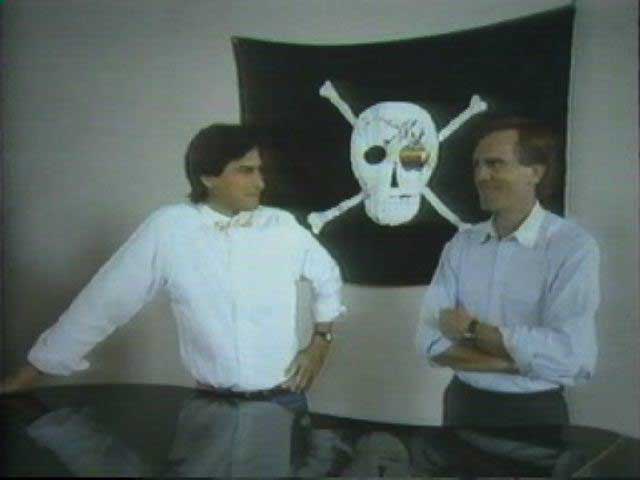 The Apple Macintosh had not been a success from the outset. The hardware was not designed particularly generously for the requirements of a graphical user interface. Especially the main memory had been calculated rather tightly. Moreover, there was no hard disk for the Mac at that time. In addition, there was a lack of appropriate software.
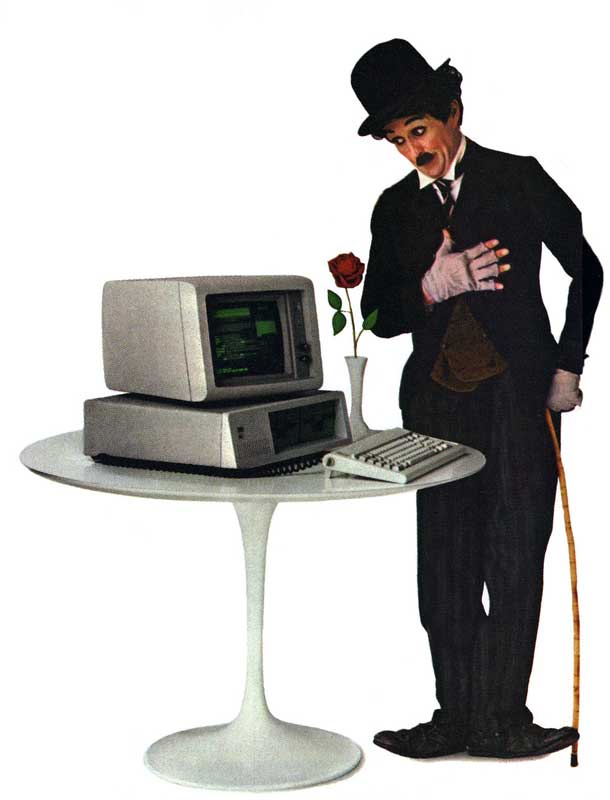 The Mac lacked the applications that dragged the Charlie Chaplin figure across the screen box by box in the IBM’s advertising spot for the PC. Therefore, Guy Kawasaki and other “Software Evangelists” of Apple made an effort to convince the developers of other software companies to write programs for the Mac. The Mac’s ROM, which had been calculated far too narrowly at 128 kilobytes, did not make this a simple task. Not until the “Fat Mac” with 512 kilobytes was launched one year after the first Macintosh had this narrow bottleneck been removed.
The problem came to a head when by the beginning of 1985, the Macs that had not found purchasers during the Christmas sales of 1984 were piling up in storage. Apple had to publish the first quarterly loss in the company’s history and release a fifth of the staff. During a marathon meeting on April 10 and 11, 1985, Apple’s CEO John Sculley demanded to have Steve Jobs relieved of his position as an Apple vice president and general manager of the Macintosh department.

On May 31, 1985, Jobs lost his responsibilities and was shuffled off to the chairman position. In September, the Apple co-founder left the company with a few people in order to found NeXT Computer. “I feel like somebody just punched me in the stomach and knocked all my wind out. I’m only 30 years old and I want to have a chance to continue creating things. I know I’ve got at least one more great computer in me. And Apple is not going to give me a chance to do that,” Jobs wrote to Mike Markkula on parting. Ten years later, Steve Jobs also commented on his disempowerment with bitterness in the TV documentary “Nerds in the Valley” (1996): Jobs:
What can I say? I hired the wrong guy. – Question: That was Sculley?
Jobs: Yeah and he destroyed everything I spent ten years working for. Starting with me but that wasn’t the saddest part. I would have gladly left Apple if Apple would have turned out like I wanted it to.
Apple’s Heart and Soul
Andy Hertzfeld, one of the Macintosh’s fathers, later recalled the events:
The conflict came to a head at the April 10th board meeting. The board thought they could convince Steve to transition back to a product visionary role, but instead he went on the attack and lobbied for Sculley’s removal. After long wrenching discussions with both of them, and extending the meeting to the following day, the board decided in favor of John, instructing him to reorganize the Macintosh division, stripping Steve of all authority. Steve would remain the chairman of Apple, but for the time being, no operating role was defined for him. John didn’t want to implement the reorganization immediately, because he still thought that he could reconcile with Steve, and get him to buy into the changes, achieving a smooth transition with his blessing. But after a brief period of depressed cooperation, Steve started attacking John again, behind the scenes in a variety of ways. I won’t go into the details here, but eventually John had to remove Steve from his management role in the Macintosh division involuntarily. Apple announced Steve’s removal, along with the first quarterly loss in their history as well as significant layoffs, on Friday, May 31, 1985, Fridays being the traditional time for companies to announce bad news. It was surely one of the lowest points of Apple history.

It is an irony of computer history that, according to industry experts, the Macintosh’s breakthrough on the market was becoming apparent exactly at the time of Jobs’ disempowerment due to the Mac’s poor sales volume. The convincing the “Macintosh Evangelists” were doing gradually began to show results.

New software companies such as Aldus had made an effort to become acquainted with the details of the “Macintosh Toolbox” and written the first desktop publishing programs, such as PageMaker. In combination with the Apple LaserWriter and the page description standard PostScript (designed by Adobe), PageMaker turned the technology of the publishing sector inside out; it did even more when the Mac Plus with 512 kilobytes of ROM entered the market by the beginning of 1986. The Mac Plus even featured cursor keys on its keyboard, which had been resolutely rejected by Steve Jobs for the first Mac, since he intended to force the users to accept the mouse as an input device.
And it is also an irony of computer history that Jobs later saved the struggling Apple Computer company. NeXT’s subsequent 1997 buyout by Apple brought Jobs back to the company he co-founded, and he has served as its CEO since then.
Steve Jobs
The only problem with Microsoft is they just have no taste, they have absolutely no taste, and what that means is – I don’t mean that in a small way I mean that in a big way. In the sense that they they don’t think of original ideas and they don’t bring much culture into their product ehm and you say why is that important – well you know proportionally spaced fonts come from type setting and beautiful books, that’s where one gets the idea – if it weren’t for the Mac they would never have that in their products and ehm so I guess I am saddened, not by Microsoft’s success – I have no problem with their success, they’ve earned their success for the most part. I have a problem with the fact that they just make really third rate products.
Steve Ballmer
I will admit quite frankly that I think Windows today is probably four years behind, three years behind where it would have been had we not danced with IBM for so long. Because the amount of split energy, split works, split IQ in the company really cost our end customer real innovation in our product line and so whenever I hear these criticisms which I gotta to say sting eh sometimes, I say to myself just you watch, just you watch Windows 95, Windows 9…there’s no lack of focus there hasn’t been here for the last three or four years since we didn’t have this big spot with IBM. Even in the operating systems here now, you’ll start to see clear, clear…and people will recognise clear leadership.


| Component | Intel Xeon (based on Core microarchitecture) | Intel Xeon (based on Nehalem microarchitecture) | |
|---|---|---|---|
| Model | Mac Pro[21] | Mac Pro (Early 2008)[22] | Mac Pro (Early 2009)[23] |
| Chipset | Intel 5000X | Intel 5400 | Intel Nehalem-based server chipset |
| Graphics Expandable to four graphics cards |
nVidia GeForce 7300 GT with 256MB of GDDR3 SDRAM (single-link and dual-link DVI ports)
Optional ATI Radeon X1900 XT with 512MB GDDR3 SDRAM (two dual-link DVI ports) or nVidia Quadro FX 4500 with 512MB GDDR3 SDRAM (stereo 3D and two dual-link DVI ports) |
ATI Radeon HD 2600 XT with 256MB of GDDR3 SDRAM (two dual-link DVI ports) Optional nVidia GeForce 8800 GT with 512MB GDDR3 SDRAM (two dual-link DVI ports) or nVidia Quadro FX 5600 1.5GB (stereo 3D, two dual-link DVI ports) |
nVidia GeForce GT 120 with 512MB of GDDR3 SDRAM (one mini-DisplayPort and one dual-link DVI port) Optional ATI Radeon HD 4870 with 512MB of GDDR5 SDRAM (one Mini DisplayPort and one dual-link DVI port) |
| Hard drive
7200-rpm unless specified |
250GB Serial ATA with 8MB cache Optional 500GB with 8MB cache or 750GB with 16MB cache |
320GB Serial ATA with 8MB cache Optional 500GB, 750GB, or 1TB Serial ATA with 16MB cache or 300GB Serial Attached SCSI, 15,000-rpm with 16MB cache |
640GB Serial ATA with 16MB cache Optional 1TB Serial ATA with 16MB cache |
| Processor | Two 2.66GHz Dual-core Intel Xeon Woodcrest Optional 2.0GHz, 2.66GHz or 3.0GHz Dual-core or 3.0GHz Quad-core |
Two 2.8GHz Quad-Core Intel Xeon Harpertown Optional two 3.0GHz or 3.2GHz Quad-core processors or one 2.8GHz Quad-core processor |
One 2.66GHz Quad-Core Intel Xeon 3500 or two 2.26GHz Quad-core Intel Xeon 5500 with 8MB of L3 cache
Optional 2.93GHz Quad-core Intel Xeon 3500 processor or two 2.66GHz or 2.93GHz Quad-core Intel Xeon 5500 processors |
| Memory | 1GB (two 512MB) of 667MHz DDR2 ECC fully buffered DIMM Expandable to 16GB |
2GB (two 1GB) of 800MHz DDR2 ECC fully buffered DIMM Expandable to 32GB |
3GB (three 1GB) or 6GB (three 2GB) of 1066MHz DDR3 ECC DIMM Expandable to 8GB on Quad-core model, and 32GB in 8-core models |
| AirPort Extreme | Optional 802.11a/b/g and draft-n (n disabled by default) | Optional 802.11a/b/g and draft-n (n-enabled) | |
| Optical drive | 16x SuperDrive with double-layer support (DVD+R DL/DVD±RW/CD-RW) | 18x SuperDrive with double-layer support (DVD+R DL/DVD±RW/CD-RW) | |
Photos: Apple
Specifications
Source: Article „Mac Pro“ (2009, March 8). In Wikipedia, The Free Encyclopedia. Retrieved 20:21, March 9, 2009, from http://en.wikipedia.org/w/index.php?title=Mac_Pro&oldid=275861403
This entry is published under the GNU General Public License.