In the context of the patent fight between Apple an HTC Gizmodo dragged out our YouTube clip from the 1996 PBS documentary „Triumph of the Nerds“ in which Jobs quotes Picasso’s „good artists copy, great artists steal“ and adds, about Apple: „We have always been shameless about stealing great ideas.“
Kategorie: Apple-History-TV
-
History of the Apple Ads (1978 – 2008)
The Classics
Current Campaigns


Commercials 1978 – 2000


(more to come …)
-
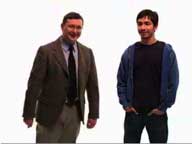
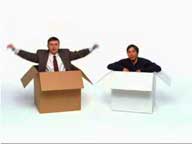
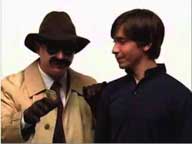
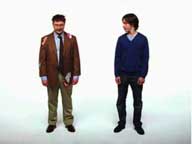
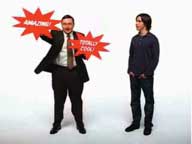
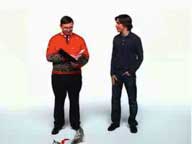
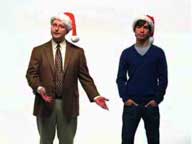
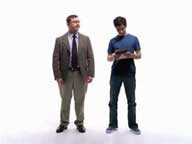
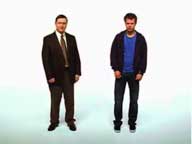
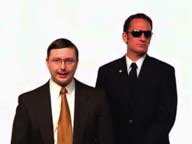
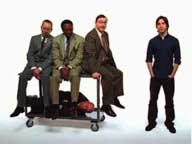
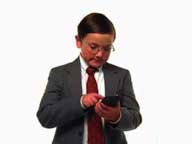
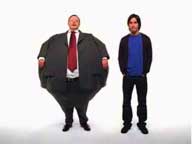
Apple Campaign "Get a Mac"
2006

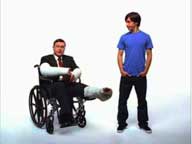
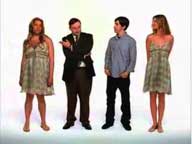
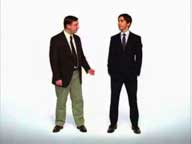
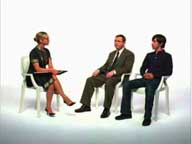
2007
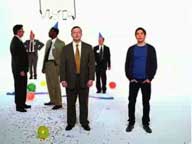
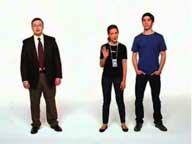
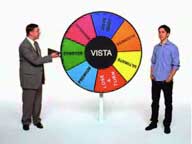
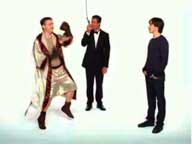
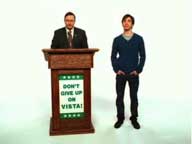
2008
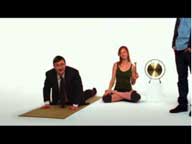
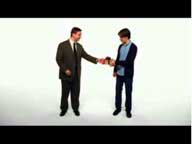
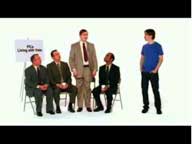

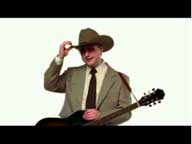



httpv://www.youtube.com/watch?v=KHO3eWlmWNc
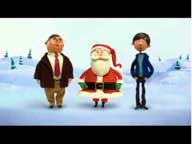
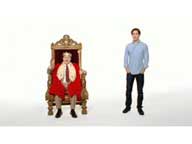
Tree Trimming – A holiday animated Get a Mac commercial. Mac and PC set aside their disagreements and decide to trim a Christmas tree by hanging ornaments and stringing lights. Mac tells PC that they are good friends while PC gets nervous. When they are finished, PC does not want to light the lights on the tree. Mac persuades him to do so. PC plugs the trees lights in and they light up and say: „PC RULES“. He apologies to Mac and says that it just sort of happened. The animation is like the Get a Mac Santa Claus ad in Rankin/Bass clay animation style.httpv://www.youtube.com/watch?v=0J0JVU3bpDE
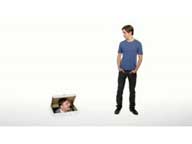
I Can Do Anything – A holiday animated Get a Mac commercial. PC asks Mac why he loves the holidays so much. Mac says it is the season for Peace on Earth. PC says that they get to be animated and they can do anything. PC demonstrates by floating in the air, building a snowman in fast motion, and talking to animals. PC asks a bunny hopping by where he is going. The bunny replies by saying he’s going to the Apple Store for some last minute gifts. PC then purposely tips the snowman’s head off making it fall on the bunny and apologies. The animation is like the Get a Mac Santa Claus ad in Rankin/Bass clay animation style.httpvh://www.youtube.com/watch?v=s9QAkW12DZY
Time Traveler—PC uses a time machine to travel to the year 2150 to see if any major issues (such as freezing and crashing) have been removed from the PC and to see if PCs are as hassle-free as Macs. Promptly after PC arrives at 2150, future PC literally freezes, which answers the question.
httpvh://www.youtube.com/watch?v=F0VvbpJR-Y0
Stacks—PC is searching through all of his pictures, trying to find a photograph of his friend. He searches one picture at a time, but Mac states that iPhoto has a feature called Faces, in which you tag the face of a person and iPhoto finds other pictures of the same person, putting them all into the same folder and saving search time. PC responds to the facial-recognition technology as expensive and tells Mac to sort the pictures instead because he has the technology to make it easier.
httpvh://www.youtube.com/watch?v=uR487qnNKCk
Legal Copy—Every time PC says something positive about himself, the legal copy that appears on the screen increases. He finally states that PCs are now 100% trouble-free, and the legal copy covers the whole screen.
httpvh://www.youtube.com/watch?v=sWaagCttaPo
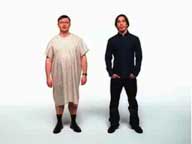
Biohazard Suit—PC first appears wearing a biohazard suit to protect himself from PC viruses and malware, of which PC says there are 20,000 discovered every day. Mac asks PC if he is going to live in the suit for the rest of his life, and PC cannot hear him because he is too protected by his virus-proof mask, and takes it off. PC then shrieks and struggles to place it on again.
httpvh://www.youtube.com/watch?v=Afa9C98gZ7w
Elimination—PC attempts to find Megan, a new laptop hunter, the perfect PC. Unfortunately, no PCs are ‚immune‘ to viruses, which is Megan’s #1 concern, so PC leaves her with Mac.
httpvh://www.youtube.com/watch?v=S6SCc6A6Kck
PC Choice Chat—PC has his own radio talk show called PC Choice Chat, and people begin to call in asking for advice on which computer to get. All the callers ask for advice on a computer that would qualify as a Mac but not a PC, as one caller asks for a computer that is for people who hate getting viruses. One other caller asks for PC help like Mac genius, and another wants to switch to Mac. PC ignores these calls.
httpvh://www.youtube.com/watch?v=D9Y0Arp-MYI
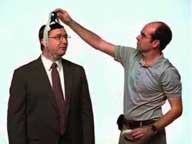
Customer Care—Mac is seen again with an Apple Genius, a real-life person who can help you with your Mac problems. PC then has a short montage of endless automated customer-support messages, never reaching a real person, which is not to PC’s liking, and he then says that his source of help is ‚the same‘ as Mac Genius.
httpvh://www.youtube.com/watch?v=tM649iQ0ass
Surprise—Mac appears alongside a customer (Andree Vermeulen), with PC notably absent. The customer says she’s looking to buy a great computer. Mac tries to convince her that she should get a PC, telling her that they’re much better and more stable. The customer seems skeptical, tells Mac she’ll „think about it“, and leaves. A frustrated Mac pulls off a mask and his clothes, revealing himself to be PC in disguise. The real Mac then appears, sees PC’s discarded mask and clothes, and says „I don’t even wanna ask.“
httpvh://www.youtube.com/watch?v=wkrdy1p9BYI
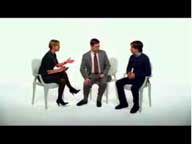
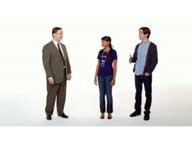
Top of the Line—PC and Mac appear with a customer who’s looking for a new computer. PC introduces her to the „top of the line“ PC (Patrick Warburton), a handsome and overly slick PC in a suit. She asks him about screen size and speed, to which Top of the Line says he’s the best, but he then balks when she says she doesn’t want to deal with any viruses or hassle. She decides to go with Mac, so Top of the Line hands her his business card and tells her to give him a call „when she’s ready to compromise.“
httpvh://www.youtube.com/watch?v=Qh1O0piBDm0
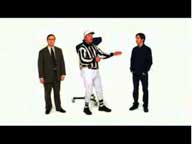
Trainer—The commercial starts off traditionally, but PC is doing sit-ups with a trainer in a striped shirt (Robert Loggia), saying fierce things to make PC improved. PC suggests the trainer try some ‚positive reinforcement‘, and is a little angry and shocked when the trainer compliments Mac instead.
httpvh://www.youtube.com/watch?v=NUZqANYD7zY
PC Innovations Lab—PC, who has wrapped another PC in Bubble Wrap, is saying that the Bubble Wrap is actually a security shield. Mac tries to speak, but PC cuts him off, showing another PC who apparently has cupholders on his shoulders. The cupholders are full of foam coffee cups, and PC takes a full coffee cup, pretending to toast the cup and saying, „Cheers to innovation“.
httpvh://www.youtube.com/watch?v=AYWmDag3ruM
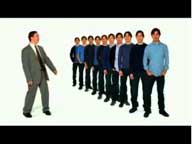
Broken Promises—PC tells Mac how excited he is about the launch of Windows 7 and assures him it won’t have the same problems as Vista. However, Mac feels like he heard this before, and has a series of flashbacks about PC assuring Mac about Windows Vista, XP, Me, 98, 95, and 2.0. On the last flashback, he says „Trust me.“ Back in the present, he says this time it’s going to be different, then says „Trust me.“ in an almost identical way to the flashback.
httpvh://www.youtube.com/watch?v=XosJw6bEzzY
Teeter Tottering—A woman who had a PC has a box of things that were in her PC and says she’s switching to Mac, but PC tries to convince her to stay while she just goes over to Mac every time.
httpvh://www.youtube.com/watch?v=AiU1Gu14xG0
PC News—PC is sitting at a news desk and turns it over to a correspondent at what seems to be a launch party for Windows 7 until a person being interviewed reveals that he is switching to a Mac. PC is surprised by this and asks why, and more people speak of how Mac is #1 with customer satisfaction and PC finally says to cut the feed. This is one of two commercials where Mac and PC acknowledge that they are in a commercial. PC: „Let’s go to a commercial.“ Mac: „We are a commercial“. PC: „Let’s go to another commercial“.
Source (Text):
„Get a Mac.“ Wikipedia, The Free Encyclopedia. 11 Sep 2008, 22:32 UTC. 14 Sep 2008 <http://en.wikipedia.org/w/index.php?title=Get_a_Mac&oldid=237810498>.
This article is published under the GNU General Public License
-
The introduction of the first Mac on January 24th, 1984
The introduction of the first Mac on January 24th, 1984; taken from the „Lost 1984 Videos“
-
Knowledge Navigator (1987/88)
The Knowledge Navigator is a concept described by former Apple Computer CEO John Sculley in his 1987 book, Odyssey. It describes a device that can access a large networked database of hypertext information, and use software agents to assist searching for information.
Apple produced several concept videos showcasing the idea. All of them featured a tablet style computer with numerous advanced capabilities, including an excellent text-to-speech system with no hint of „computerese“, a gesture based interface reminiscent of the multitouch interface used on the iPhone and an equally powerful speech understanding system, allowing the user to converse with the system via an animated „butler“ as the software agent.
In one vignette a university professor returns home and turns on his computer, in the form of a tablet the size of a large-format book. The agent is a bow-tie wearing butler who appears on the screen and informs him that he has several calls waiting. He ignores most of these, from his mother, and instead uses the system to compile data for a talk on deforestation in the Amazon rainforest. While he is doing this, the computer informs him that a colleague is calling, and they then exchange data through their machines while holding a video based conversation.
In another such video, a young student uses a smaller handheld version of the system to prompt him while he gives a class presentation on volcanoes, eventually sending a movie of an exploding volcano to the video „blackboard“. In a final installment a user scans in a newspaper by placing it on the screen of the full-sized version, and then has it help him learn to read by listening to him read the scanned results, and prompting when he pauses.
The videos were written and conceived by Hugh Dubberly and Doris Mitsch of Apple Creative Services, and produced by The Kenwood Group in San Francisco. Director: Randy Field. Director of Photography: Bill Zarchy. As a vision statement the films were groundbreaking, as powerful a vision of the future of computing as 2001: A Space Odyssey. It may be useful to note that the video opened with the statement „In the year 2010.“ Most viewers missed this indication that the Knowledge Navigator was a visitor from the future and wanted the features now.
The astute bow tie wearing software agent in the video has been the center of quite a few heated discussions in the domain of human-computer interaction. It was criticized as being an unrealistic portrayal of the capacities of any software agent in the foreseeable future, or even in a distant future. Some user interface professionals like Ben Shneiderman of the University of Maryland, College Park have also criticized its use of a human likeness for giving a misleading idea of the nature of any interaction with a computer, present or future.
Compared to recent research in the field of ubiquitous computing and augmented reality interfaces many of the aspects of the Knowledge Navigator seem a bit quaint. For some however this video prototype was and/or still is a source of motivation for their work. They see it as a goal set in a future they might help create one day. To some extent the concept was also used to position the Apple Newton handheld device. Newton was released before the technology was mature however, and proved to be a commercial failure. Eventually, the advent of the Internet and the World Wide Web and several devices marketed by Apple’s competitors would indeed fulfill some of the visions of the Knowledge Navigator.
Source:
Knowledge Navigator. (2008, August 28). In Wikipedia, The Free Encyclopedia. Retrieved 13:46, November 2, 2008, from http://en.wikipedia.org/w/index.php?title=Knowledge_Navigator&oldid=234849787
This article is licenced under the GNU Free Documentation License
-
“1984″ – The famous Super Bowl Spot
The most famous Super Bowl ad
„1984“ is an American television commercial which introduced the Apple Macintosh personal computer for the first time. It was conceived by Steve Hayden, Brent Thomas and Lee Clow at Chiat/Day, Venice, produced by New York production company Fairbanks Films, and directed by Ridley Scott. Anya Major performed as the unnamed heroine and David Graham as Big Brother.
Its only U.S. daytime televised broadcast was on January 22, 1984 during and as part of the telecast of the third quarter of Super Bowl XVIII. Chiat/Day also ran the ad one other time on television, in December 1983 right before the 1:00 am sign-off on KMVT in Twin Falls, Idaho, so that the advertisement could be submitted to award ceremonies for that year.
In addition, starting on January 17, 1984 it was screened prior to previews in movie theaters for a few weeks. It has since been seen on television commercial compilation specials, as well as in „Retro-mercials“ on TV Land. The estate of George Orwell and the television rightsholder to the novel 1984 considered the commercial to be a flagrant copyright infringement, and sent a cease-and-desist letter to Apple and Chiat/Day in April 1984. The commercial was never televised as a commercial after that.
In one interpretation of the commercial, „1984“ used the unnamed heroine to represent the coming of the Macintosh (indicated by her white tank top with a cubist picture of Apple’s Macintosh computer on it) as a means of saving humanity from „conformity“ (Big Brother). These images were an allusion to George Orwell’s noted novel, Nineteen Eighty-Four, which described a dystopian future ruled by a televised „Big Brother“. The rows of marching minions have direct cinematic parallels with those in the opening scenes of the classic dystopian film Metropolis.
Originally a subject of contention within Apple, it has nevertheless consistently been lauded as a classic, winning critical acclaim over time. It is now considered a watershed event and a masterpiece in advertising, and is widely regarded as one of the most memorable and successful American television commercials of all time.
The commercial was rebroadcast in an updated version in 2004 on its 20th anniversary, with the heroine modified to be listening to an iPod. Viewers generally saw the Big Brother target of the Apple advertisement as being Microsoft, with the original villain, IBM, being all but forgotten.
Making of the Apple Ad 1984 Plot
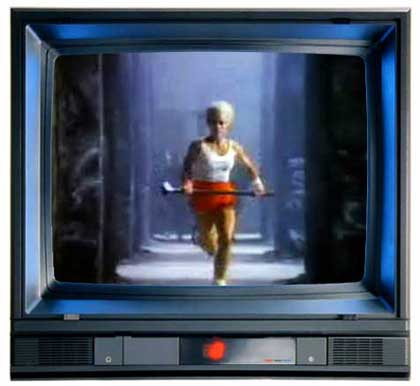
The commercial opens with a dystopic, industrial setting in blue and gray tones, showing a line of people (of ambiguous gender) marching in unison through a long tunnel monitored by a string of telescreens. This is in sharp contrast to the full-color shots of the nameless runner (Anya Major). She looks like an Olympic track and field athlete, as she is carrying a large brass-headed hammer and is wearing an athletic „uniform“ (bright orange athletic shorts, running shoes, a white tank top with a cubist picture of Apple’s Macintosh computer, a white sweat band on her left wrist, and a red one on her right).
As she is chased by four police officers (presumably agents of the Thought Police) wearing black uniforms, protected by riot gear, helmets with visors covering their faces, and armed with large night sticks, she races towards a large screen with the image of a Big Brother-like figure (David Graham, also seen on the telescreens earlier) giving a speech:
My friends, each of you is a single cell in the great body of the State. And today, that great body has purged itself of parasites. We have triumphed over the unprincipled dissemination of facts. The thugs and wreckers have been cast out. And the poisonous weeds of disinformation have been consigned to the dustbin of history. Let each and every cell rejoice! For today we celebrate the first, glorious anniversary of the Information Purification Directive! We have created, for the first time in all history, a garden of pure ideology. Where each worker may bloom secure from the pests purveying contradictory truths. Our Unification of Thoughts is more powerful a weapon than any fleet or army on earth. We are one people, with one will, one resolve, one cause. Our enemies shall talk themselves to death and we will bury them with their own confusion. We shall prevail!
The runner, now close to the screen, hurls the hammer towards it, right at the moment Big Brother announces, „we shall prevail!“ In a flurry of light and smoke, the screen is destroyed, shocking the people watching the screen.
The commercial concludes with a portentous voiceover, accompanied by scrolling black text (in Apple’s early signature „Garamond“ font); the hazy, whitish-blue aftermath of the cataclysmic event serves as the background. It reads:On January 24th, Apple Computer will introduce Macintosh. And you’ll see why 1984 won’t be like „1984.
The screen fades to black as the voiceover ends, and the rainbow Apple logo appears.
Production
Development
The commercial was created by the advertising agency Chiat/Day, Venice, with copy by Steve Hayden, art direction by Brent Thomas and creative direction by Lee Clow. Ridley Scott (whose dystopian sci-fi film, Blade Runner was released two years prior) was hired by agency producer Richard O’Neill to direct it, with a then-„unheard-of production budget of $900,000.“ The actors who appeared in the commercial were paid $25 per day.
The copywriter of the ad was Steve Hayden. At the time he worked for Chiat/Day, the company that produced the spot. He’s now vice-chairman at Ogilvy and Mather. NPR’s Liane Hansen spoke with Hayden about the ad’s impact:
[jwplayer mediaid=“2265″]
Steve Jobs and John Sculley were so enthusiastic about the final product that they „…purchased one and a half minutes of ad time for the Super Bowl, annually the most-watched television program in America. In December 1983 they screened the commercial for the Apple Board of Directors. To Jobs‘ and Sculley’s surprise, the entire board hated the commercial.“ However, Scully himself got „cold feet“ and asked Chiat/Day to sell off the two commercial spots.
Despite the board’s dislike of the film, Steve Jobs continued to support it. Steve Wozniak watched it and offered to pay for half of the spot personally if the board refused to air it.Of the original ninety seconds booked, Chiat/Day managed to resell thirty seconds to another advertiser, leaving the other sixty second slot.
Intended message
Adelia Cellini states in a 2004 article for MacWorld, „The Story Behind Apple’s ‚1984‘ TV Commercial„:
Let’s see – an all-powerful entity blathering on about Unification of Thoughts to an army of soulless drones, only to be brought down by a plucky, Apple-esque underdog. So Big Brother, the villain from Apple’s ‚1984‘ Mac ad, represented IBM, right? According to the ad’s creators, that’s not exactly the case. The original concept was to show the fight for the control of computer technology as a struggle of the few against the many, says TBWA/Chiat/Day’s Lee Clow. Apple wanted the Mac to symbolize the idea of empowerment, with the ad showcasing the Mac as a tool for combating conformity and asserting originality. What better way to do that than have a striking blonde athlete take a sledghammer to the face of that ultimate symbol of conformity, Big Brother?
However, in his 1983 Apple keynote address, Steve Jobs made the following comment before showcasing a preview of the commercial to a select audience:
It is now 1984. It appears IBM wants it all. Apple is perceived to be the only hope to offer IBM a run for its money. Dealers initially welcoming IBM with open arms now fear an IBM dominated and controlled future. They are increasing and desperately turning back to Apple as the only force that can ensure their future freedom. IBM wants it all and is aiming its guns on its last obstacle to industry control, Apple. Will Big Blue dominate the entire computer industry? The entire information age? Was George Orwell right about 1984?
Reception
Awards
* 2007: Best Super Bowl Spot (in the game’s 40-year history)
* 1999: TV Guide – Number One Greatest Commercial of All Time
* 1995: Advertising Age – Greatest Commercial
* 1984: 31st Cannes Lions International Advertising Festival – Grand Prix
Social impact
Ted Friedman, in his 2005 text, Electric Dreams: Computers in American Culture, notes the impact of the commercial:
Super Bowl viewers were overwhelmed by the startling ad. The ad garnered millions of dollars worth of free publicity, as news programs rebroadcast it that night. It was quickly hailed by many in the advertising industry as a masterwork. Advertising Age named it the 1980s Commercial of the Decade, and it continues to rank high on lists of the most influential commercials of all time […] 1984 was never broadcast again, adding to its mystique.
1984 became a signature representation of Apple computers. It was scripted as a thematic element in the 1999 docudrama, Pirates of Silicon Valley, which explores the rise of Apple and Microsoft (the film opens and closes with references to the commercial including a re-enactment of the heroine running towards the screen of Big Brother and clips of the original commercial).
„1984“ became a signature representation of Apple computers. It was scripted as a thematic element in the 1999 docudrama, Pirates of Silicon Valley, which explores the rise of Apple and Microsoft (the film opens and closes with references to the commercial including a re-enactment of the heroine running towards the screen of Big Brother and clips of the original commercial). The „1984“ ad was also prominent in the 20th anniversary celebration of the Macintosh in 2004, as Apple reposted a new version of the ad on its website. In this updated version, an iPod, complete with signature white earbuds, was digitally added to the heroine. Attendees were given a poster showing the heroine with iPod as a commemorative gift.
Influence in media
A commercial for the video game Half-Life 2 was based on this commercial. A parody of the commercial is seen in the Futurama episode Future Stock, promoting Planet Express. Another parody appears in The Simpsons TV show episode Mypods and Boomsticks, featuring Steve Jobs as „Big Brother“ and the Comic Book Guy as the runner.
For the 20th anniversary of the Macintosh, Apple re-released the ad with the runner wearing an iPod.
Further reading
- Cellini, Adelia. „The story behind Apple’s ‚1984‘ TV commercial: Big Brother at 20.(Mac Beat).“ Macworld, January, 2004.
- Clow, Lee. Lee Clow: His Masterpiece – 1984
- Friedman, Ted „Chapter Five: Apple’s 1984.“ Electric Dreams: Computers in American Culture. New York: NYU Press, 2005: 100-120.
- —.Apple’s 1984: The Introduction of the Macintosh in the Cultural History of Personal Computers
- Hansen, Liane. „A Look Back at Apple’s Super Ad: Landmark 1984 Spot Smashed ‚Big Brother,‘ Launched the Mac.“ NPR, February 1, 2004. (Steve Hayden interview)
- Leopold, Todd. Why 2006 isn’t like ‚1984‘. CNN, February 3, 2006.
- Maney, Kevin. „Apple’s ‚1984‘ Super Bowl commercial still stands as watershed event.“ USA Today, January 28, 2004.
- Mr. Showbiz. „Interview with Ridley Scott
- myoldmac.net. „In Memory of Jef Raskin … He Thought Different: The Making of 1984.“
- Moriarty, Sandra. „AN INTERPRETIVE STUDY OF VISUAL CUES IN ADVERTISING,“ University of Colorado.
- Roszak, Theodore. „Raging Against the Machine: In its ‚1984‘ Commercial, Apple Suggested that its Computers Would Smash Big Brother. But Technology Gave Him More Control.“ Los Angeles Times, January 28, 2004.
- Scott, Linda. „For the Rest of Us“: A Reader-Oriented Interpretation of Apple’s ‚1984‘ Commercial.“ The Journal of Popular Culture, Volume 25 Issue 1, Summer 1991: 67-81.
Source:
1984 (advertisement). (2012, May 13). In Wikipedia, The Free Encyclopedia. Retrieved 12:12, June 2, 2012, from http://en.wikipedia.org/w/index.php?title=1984_(advertisement)&oldid=492407781
A Look Back at Apple's Super Ad : NPR.
This article is licenced under the GNU Free Documentation License
-
Steve Jobs introduces the Think Different campaign (1997)
In the video embedded below, the Apple CEO introduces the company’s 1997 Think Different campaign. A key quote:
[Our new ad campaign] honors those people who have changed the world. Some of them are living, some of them are not. But the ones that aren’t–you know that if they ever used a computer, it would have been a Mac.
And another:
This is a very complicated world. This is a very noisy world, and we’re not going to get a chance…to get people to remember much about us. No company is. And so we have to be really clear on what we want them to know about us.
And this is the TV spot:
