The FBI has released, and posted on its web site, Steve Jobs‘ 191-page FBI file. The file consists of a 1991 background investigation conducted when Jobs was being considered for an appointment to the President’s Export Council in the Bush I White House, and records of a 1985 bomb threat against him.
The file includes the results of interviews with Jobs and those who knew him. The records reinforce the picture of Jobs that has been known to many followers of his career and Apple. Biographer Walter Isaacson’s best-selling book about Jobs, released last year, outlines his use of drugs and mercurial personality. While many people interviewed by the FBI described Jobs favorably, some said he wasn’t always truthful.
“Several individuals questioned Mr. Jobs’s honesty stating that Mr. Jobs will twist the truth and distort reality in order to achieve his goals,” according to the materials released by the FBI.
It All Began with „Annie“ – The Vision of a Computer for the Masses
(Updated: May 2018)
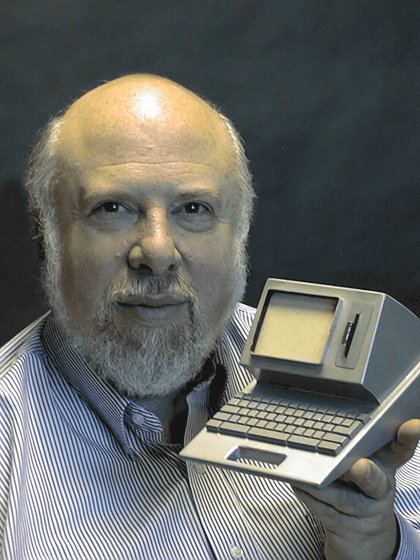
It had been a long way until the day of the official introduction of the Macintosh on January 24th, 1984. Five years earlier, in spring 1979, Apple chairman Mike Markkula wondered whether his company should bring a 500 dollar computer to market. Markkula then charged Jef Raskin with the secret “Annie” project.
Raskin was a „philosophical guy who could be both playful and ponderous“, writes Walter Isaacson in his book „Steve Jobs“. Raskin had studied computer science, taught music and visual arts, conducted a chamber opera company, and organized guerrilla theater. His 1967 doctoral thesis at U.C. San Diego argued that computers should have graphical rather than text-based interfaces.
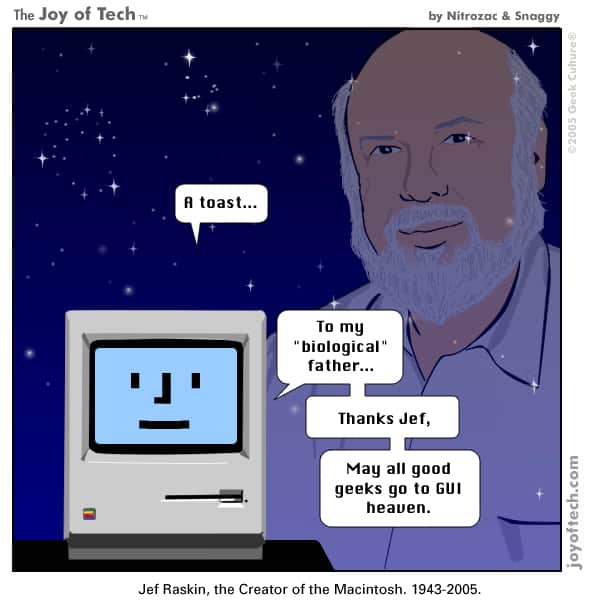
Jef Raskin
Raskin had been responsible for Apple’s publications, particularly manuals, and actually was to more intensely oversee the developers writing the applications for the Apple II. “I told him [Markkula] it was a fine project, but I wasn’t terribly interested in a 500-dollar game machine,” Raskin later remembered. “However, there was this thing that I’d been dreaming about – it was [that] it would be designed from a human factors perspective, which at that time was totally incomprehensible.”
In fall 1979, Raskin wrote his article „Computers by the Millions„, in which he drafted his version of a computer for the masses. Markkula insisted on the report to be treated as a confidential internal report. The essay was not published until 1982 in the SIGPC Newsletter, Vol. 5, No. 2.
Raskin had chosen a completely new approach, because until then, the “technically feasible” is what defined a computer’s design. The academic computer scientist, who had kept secret his diploma from the Apple founders at the time of his appointment (as Steve Wozniak and Steve Jobs approached academics extremely distrustfully), wanted to design a computer for the normal person in the street – which of course could not to be unattainable.
The expression of the “Person in the Street” formed by Raskin became a dictum at Apple – abbreviated as PITS. Raskin’s first draft envisioned a closed computer including monitor, keyboard and printer able to work without any external wires – and all that for 500 dollars. In return, the Macintosh should only be equipped with a tiny five inch display, a cheap CPU (6809) and a main memory calculated extremely tight at 64 kilobytes.
Steve Jobs and Jef Raskin
At that time, Steve Jobs had not taken particular interest in the Macintosh project – and due to some dim apprehension, Raskin tried everything to exclude the Apple co-founder. Yet in the summer of 1980, a serious conflict between Jobs and Apple’s president Mike Scott was brewing as Scott intended to edge Jobs out of the concrete development of the new Lisa. With his capricious and at times fairly aggressive management style, Jobs had snubbed many developers. In addition, Scott did not think him capable of a major management role and thus planned to assign him the less important role of a company spokesman and promoter in advance of Apple’s initial public offering on December 12th, 1980.
So, Jobs left the Lisa project – and looked at Jef Raskin’s baby. The Apple co-founder liked the concept of a cheap machine for the mass market, but he didn’t like Raskin’s design. „Jobs was enthralled by Raskin’s vision, but not by his willingness to make compromises to keep down the cost,“ writes Isaacson. At one point in the fall of 1979 Jobs told him instead to focus on building what he repeatedly called an “insanely great” product. “Don’t worry about price, just specify the computer’s abilities,” Jobs told him. Raskin responded with a sarcastic memo. It spelled out everything you would want in the proposed computer: a high-resolution color display, a printer that worked without a ribbon and could produce graphics in color at a page per second, unlimited access to the ARPA net, and the capability to recognize speech and synthesize music, “even simulate Caruso singing with the Mormon tabernacle choir, with variable reverberation.” The memo concluded, “Starting with the abilities desired is nonsense. We must start both with a price goal, and a set of abilities, and keep an eye on today’s and the immediate future’s technology.” In other words, Raskin had little patience for Jobs’ belief that you could distort reality if you had enough passion for your product.
Jobs wanted to switch to the more powerful Motorola 68000 CPU. Raskin demanded a cheaper processor, and lost again. He had to brood and recalculate the cost of the Mac. The disagreements were more than just technical or philosophical; they became clashes of personality. “I think that he likes people to jump when he says jump,” Raskin once said. “I felt that he was untrustworthy, and that he does not take kindly to being found wanting. He doesn’t seem to like people who see him without a halo.” Jobs was equally dismissive of Raskin. “Jef was really pompous,” he said Isaacson. “He didn’t know much about interfaces. So, I decided to nab some of his people who were really good, like Atkinson, bring in some of my own, take the thing over and build a less expensive Lisa, not some piece of junk.”
Jobs asserted his control of the Macintosh group by canceling a brown-bag lunch seminar that Raskin was scheduled to give to the whole company in February 1981. Raskin happened to go by the room anyway and discovered that there were a hundred people there waiting to hear him; Jobs had not bothered to notify anyone else about his cancellation order. So Raskin went ahead and gave a talk, writes Isaacson.
That incident led Raskin to write a blistering memo to Mike Scott, who once again found himself in the difficult position of being a president trying to manage a company’s temperamental cofounder and major stockholder. It was titled “Working for/with Steve Jobs,” and in it Raskin asserted:
He is a dreadful manager… I have always liked Steve, but I have found it impossible to work for him… Jobs regularly misses appointments. This is so well-known as to be almost a running joke… He acts without thinking and with bad judgment… He does not give credit where due… Very often, when told of a new idea, he will immediately attack it and say that it is worthless or even stupid and tell you that it was a waste of time to work on it. This alone is bad management, but if the idea is a good one he will soon be telling people about it as though it was his own.
That afternoon Scott called in Jobs and Raskin for a showdown in front of Markkula. After a short dog fight Raskin was told to take a leave of absence. “They wanted to humor me and give me something to do, which was fine,” Jobs said Isaacson. “It was like going back to the garage for me. I had my own ragtag team and I was in control.“
It is somehow ironic that Jef Raskin was the person who convinced Steve Jobs to visit the Xerox Palo Alto Research Center (PARC). The scientists over there pioneered the concept of a graphical user interface (GUI). Bitmapping and graphical interfaces became features of Xerox PARC’s prototype computers, such as the Alto, and its object-oriented programming language, Smalltalk. Jef Raskin decided that these features were the future of computing. So, he began urging Jobs and other Apple colleagues to go check out Xerox PARC. Jobs first refused on the grounds that a large corporation couldn’t possibly be doing anything interesting. But in the end Jobs went to Xerox PARC in December 1979 – and was enlightened.
The rest of the story is well known. For Jobs it was a turning-point. Jobs decided that this was the way forward for Apple.
They showed me really three things. But I was so blinded by the first one I didn’t even really see the other two. One of the things they showed me was object orienting programming they showed me that but I didn’t even see that. The other one they showed me was a networked computer system…they had over a hundred Alto computers all networked using email etc., etc., I didn’t even see that. I was so blinded by the first thing they showed me which was the graphical user interface. I thought it was the best thing I’d ever seen in my life. Now remember it was very flawed, what we saw was incomplete, they’d done a bunch of things wrong. But we didn’t know that at the time but still though they had the germ of the idea was there and they’d done it very well and within you know ten minutes it was obvious to me that all computers would work like this some day.
Steve Jobs in „Thriumph of the Nerds“.
Larry Tesler, at this time a scientist at Xerox PARC, once said: „After an hour looking at demos they understood our technology, and what it meant more than any Xerox executive understood after years of showing it to them.“ Jobs tried everything to improve the GUI he had seen at PARC for the new Apple Macintosh.
Andy Hertzfeld, one of the leading Software engineers in the Macintosh project, disputes the view, Jef Raskin was the father of the Apple Macintosh. In an interview with CNET Andy called Steve Jobs „The father of the Macintosh“:
Question: How about Jef Raskin?
Answer: Jef Raskin is the single individual who disagrees with the way I’m telling the story, and he was unhappy with the book (How The Mac Was Made) when he first found out about it, and I suspect he’s still unhappy now.
Jef does claim he invented certain key concepts when no one else thinks he did. Jef actually was not around for almost the entire time the Mac was developed. He left the day before I started (in 1981). Jef’s a tremendous individual and he deserves enormous credit for having the original vision for the Macintosh, starting the project and putting together a dynamite, small team. But then he got at odds with the team and left.
Jef had a lot of ideas about how the Macintosh should be, but they’re not in the Macintosh. If you’re interested: Jef, because he left early, by 1985 he had already designed and licensed a computer that does embody all his ideas–it’s called the Canon Cat.
Question: Then who would you consider the father of the Macintosh?
Answer: Steve Jobs is who I would call the father of the Mac. In second place I’d put Burrell Smith and in third place I’d put Bill Atkinson.
In 1982, Jef Raskin founded the company Information Appliance, Inc. in order to realize his original concept of the Macintosh project. The company brought the “SwyftCard” to market, which is a firmware card for the Apple II. The card featured a program package which was also offered on disk as SwyftWare. With the Swyft, Information Appliance later offered a laptop computer, which, however, experienced only moderate commercial success. Raskin licensed the Swyft design to Canon, which constructed the “Canon CAT” on its basis in 1987.
Despite the broad attention the Canon’s innovative interface attracted, this product did not achieve a breakthrough either. Canon stopped selling the CAT in 1988 – „after a brief and expensive „image“ advertising campaign „that did not explain the product’s advantages in any way (Jef Raskin in an email to the „Amercian Scientist“ in 1997. „A bitmapped, 68000-based machine, it was equal to the Macintosh of the time in power and screen resolution. The CAT had net-ready and BBS communications build in. In a disastrous miscalculation, Canon did not allow the product’s graphics capabilities to be advertised or mentioned in the manual because the daisy-wheel printer they wanted to sell with it couldn’t reproduce the graphics or offer a change of font on the fly.“
Raskin also blamed Steve Jobs for the failure, since it was Jobs who as the head of NeXT Computer persuaded Canon into giving up the Cat project. However, it was claimed that Cat also fell victim to internal rivalries at Canon.
In his book “The Humane Interface”, Raskin later described his vision of a computer interface constructed for the human being and oriented to human needs – rather than to technology.
On February 26th, 2005, Jef Raskin died at the age of 61 years.
In the context of the patent fight between Apple an HTC Gizmodo dragged out our YouTube clip from the 1996 PBS documentary „Triumph of the Nerds“ in which Jobs quotes Picasso’s „good artists copy, great artists steal“ and adds, about Apple: „We have always been shameless about stealing great ideas.“
Steve Jobs family has issued the following statement.
Steve died peacefully today surrounded by his family.
In his public life, Steve was known as a visionary; in his private life, he cherished his family. We are thankful to the many people who have shared their wishes and prayers during the last year of Steve’s illness; a website will be provided for those who wish to offer tributes and memories.
We are grateful for the support and kindness of those who share our feelings for Steve. We know many of you will mourn with us, and we ask that you respect our privacy during our time of grief.
Apple announced on August, 24 2011 that CEO and co-founder Steve Jobs had stepped down from his helm, but will serve as chairman of the board. Ray Suarez discusses Jobs‘ lasting impact on innovation and what comes next for Apple and the tech world with Walter Mossberg of The Wall Street Journal and Charles Golvin of Forrester Research.
„1984“ is an American television commercial which introduced the Apple Macintosh personal computer for the first time. It was conceived by Steve Hayden, Brent Thomas and Lee Clow at Chiat/Day, Venice, produced by New York production company Fairbanks Films, and directed by Ridley Scott. Anya Major performed as the unnamed heroine and David Graham as Big Brother.
Its only U.S. daytime televised broadcast was on January 22, 1984 during and as part of the telecast of the third quarter of Super Bowl XVIII. Chiat/Day also ran the ad one other time on television, in December 1983 right before the 1:00 am sign-off on KMVT in Twin Falls, Idaho, so that the advertisement could be submitted to award ceremonies for that year.
In addition, starting on January 17, 1984 it was screened prior to previews in movie theaters for a few weeks. It has since been seen on television commercial compilation specials, as well as in „Retro-mercials“ on TV Land. The estate of George Orwell and the television rightsholder to the novel 1984 considered the commercial to be a flagrant copyright infringement, and sent a cease-and-desist letter to Apple and Chiat/Day in April 1984. The commercial was never televised as a commercial after that.
In one interpretation of the commercial, „1984“ used the unnamed heroine to represent the coming of the Macintosh (indicated by her white tank top with a cubist picture of Apple’s Macintosh computer on it) as a means of saving humanity from „conformity“ (Big Brother). These images were an allusion to George Orwell’s noted novel, Nineteen Eighty-Four, which described a dystopian future ruled by a televised „Big Brother“. The rows of marching minions have direct cinematic parallels with those in the opening scenes of the classic dystopian film Metropolis.
Originally a subject of contention within Apple, it has nevertheless consistently been lauded as a classic, winning critical acclaim over time. It is now considered a watershed event and a masterpiece in advertising, and is widely regarded as one of the most memorable and successful American television commercials of all time.
The commercial was rebroadcast in an updated version in 2004 on its 20th anniversary, with the heroine modified to be listening to an iPod. Viewers generally saw the Big Brother target of the Apple advertisement as being Microsoft, with the original villain, IBM, being all but forgotten.
Making of the Apple Ad 1984
Plot
The commercial opens with a dystopic, industrial setting in blue and gray tones, showing a line of people (of ambiguous gender) marching in unison through a long tunnel monitored by a string of telescreens. This is in sharp contrast to the full-color shots of the nameless runner (Anya Major). She looks like an Olympic track and field athlete, as she is carrying a large brass-headed hammer and is wearing an athletic „uniform“ (bright orange athletic shorts, running shoes, a white tank top with a cubist picture of Apple’s Macintosh computer, a white sweat band on her left wrist, and a red one on her right).
As she is chased by four police officers (presumably agents of the Thought Police) wearing black uniforms, protected by riot gear, helmets with visors covering their faces, and armed with large night sticks, she races towards a large screen with the image of a Big Brother-like figure (David Graham, also seen on the telescreens earlier) giving a speech:
My friends, each of you is a single cell in the great body of the State. And today, that great body has purged itself of parasites. We have triumphed over the unprincipled dissemination of facts. The thugs and wreckers have been cast out. And the poisonous weeds of disinformation have been consigned to the dustbin of history. Let each and every cell rejoice! For today we celebrate the first, glorious anniversary of the Information Purification Directive! We have created, for the first time in all history, a garden of pure ideology. Where each worker may bloom secure from the pests purveying contradictory truths. Our Unification of Thoughts is more powerful a weapon than any fleet or army on earth. We are one people, with one will, one resolve, one cause. Our enemies shall talk themselves to death and we will bury them with their own confusion. We shall prevail!
The runner, now close to the screen, hurls the hammer towards it, right at the moment Big Brother announces, „we shall prevail!“ In a flurry of light and smoke, the screen is destroyed, shocking the people watching the screen.
The commercial concludes with a portentous voiceover, accompanied by scrolling black text (in Apple’s early signature „Garamond“ font); the hazy, whitish-blue aftermath of the cataclysmic event serves as the background. It reads:
On January 24th, Apple Computer will introduce Macintosh. And you’ll see why 1984 won’t be like „1984.
The screen fades to black as the voiceover ends, and the rainbow Apple logo appears.
Production
Development
The commercial was created by the advertising agency Chiat/Day, Venice, with copy by Steve Hayden, art direction by Brent Thomas and creative direction by Lee Clow. Ridley Scott (whose dystopian sci-fi film, Blade Runner was released two years prior) was hired by agency producer Richard O’Neill to direct it, with a then-„unheard-of production budget of $900,000.“ The actors who appeared in the commercial were paid $25 per day.
The copywriter of the ad was Steve Hayden. At the time he worked for Chiat/Day, the company that produced the spot. He’s now vice-chairman at Ogilvy and Mather. NPR’s Liane Hansen spoke with Hayden about the ad’s impact:
[jwplayer mediaid=“2265″]
Steve Jobs and John Sculley were so enthusiastic about the final product that they „…purchased one and a half minutes of ad time for the Super Bowl, annually the most-watched television program in America. In December 1983 they screened the commercial for the Apple Board of Directors. To Jobs‘ and Sculley’s surprise, the entire board hated the commercial.“ However, Scully himself got „cold feet“ and asked Chiat/Day to sell off the two commercial spots.
Despite the board’s dislike of the film, Steve Jobs continued to support it. Steve Wozniak watched it and offered to pay for half of the spot personally if the board refused to air it.
Of the original ninety seconds booked, Chiat/Day managed to resell thirty seconds to another advertiser, leaving the other sixty second slot.
Let’s see – an all-powerful entity blathering on about Unification of Thoughts to an army of soulless drones, only to be brought down by a plucky, Apple-esque underdog. So Big Brother, the villain from Apple’s ‚1984‘ Mac ad, represented IBM, right? According to the ad’s creators, that’s not exactly the case. The original concept was to show the fight for the control of computer technology as a struggle of the few against the many, says TBWA/Chiat/Day’s Lee Clow. Apple wanted the Mac to symbolize the idea of empowerment, with the ad showcasing the Mac as a tool for combating conformity and asserting originality. What better way to do that than have a striking blonde athlete take a sledghammer to the face of that ultimate symbol of conformity, Big Brother?
However, in his 1983 Apple keynote address, Steve Jobs made the following comment before showcasing a preview of the commercial to a select audience:
It is now 1984. It appears IBM wants it all. Apple is perceived to be the only hope to offer IBM a run for its money. Dealers initially welcoming IBM with open arms now fear an IBM dominated and controlled future. They are increasing and desperately turning back to Apple as the only force that can ensure their future freedom. IBM wants it all and is aiming its guns on its last obstacle to industry control, Apple. Will Big Blue dominate the entire computer industry? The entire information age? Was George Orwell right about 1984?
Reception
Awards
* 2007: Best Super Bowl Spot (in the game’s 40-year history)
* 1999: TV Guide – Number One Greatest Commercial of All Time
* 1995: Advertising Age – Greatest Commercial
* 1984: 31st Cannes Lions International Advertising Festival – Grand Prix
Social impact
Ted Friedman, in his 2005 text, Electric Dreams: Computers in American Culture, notes the impact of the commercial:
Super Bowl viewers were overwhelmed by the startling ad. The ad garnered millions of dollars worth of free publicity, as news programs rebroadcast it that night. It was quickly hailed by many in the advertising industry as a masterwork. Advertising Age named it the 1980s Commercial of the Decade, and it continues to rank high on lists of the most influential commercials of all time […] 1984 was never broadcast again, adding to its mystique.
1984 became a signature representation of Apple computers. It was scripted as a thematic element in the 1999 docudrama, Pirates of Silicon Valley, which explores the rise of Apple and Microsoft (the film opens and closes with references to the commercial including a re-enactment of the heroine running towards the screen of Big Brother and clips of the original commercial).
„1984“ became a signature representation of Apple computers. It was scripted as a thematic element in the 1999 docudrama, Pirates of Silicon Valley, which explores the rise of Apple and Microsoft (the film opens and closes with references to the commercial including a re-enactment of the heroine running towards the screen of Big Brother and clips of the original commercial). The „1984“ ad was also prominent in the 20th anniversary celebration of the Macintosh in 2004, as Apple reposted a new version of the ad on its website. In this updated version, an iPod, complete with signature white earbuds, was digitally added to the heroine. Attendees were given a poster showing the heroine with iPod as a commemorative gift.
Influence in media
A commercial for the video game Half-Life 2 was based on this commercial. A parody of the commercial is seen in the Futurama episode Future Stock, promoting Planet Express. Another parody appears in The Simpsons TV show episode Mypods and Boomsticks, featuring Steve Jobs as „Big Brother“ and the Comic Book Guy as the runner.
For the 20th anniversary of the Macintosh, Apple re-released the ad with the runner wearing an iPod.
Scott, Linda. „For the Rest of Us“: A Reader-Oriented Interpretation of Apple’s ‚1984‘ Commercial.“ The Journal of Popular Culture, Volume 25 Issue 1, Summer 1991: 67-81.
In the video embedded below, the Apple CEO introduces the company’s 1997 Think Different campaign. A key quote:
[Our new ad campaign] honors those people who have changed the world. Some of them are living, some of them are not. But the ones that aren’t–you know that if they ever used a computer, it would have been a Mac.
And another:
This is a very complicated world. This is a very noisy world, and we’re not going to get a chance…to get people to remember much about us. No company is. And so we have to be really clear on what we want them to know about us.
David Pogue, of the New York Times, Arik Hesseldahl, of BusinessWeek, and Leander Kahney, of Cultofmac.com, discuss the cult of Steve Jobs and whether he deserves the status (2010-Apr-02).